ASBA stands for Application Supported by Blocked Amount, is a secure, efficient way introduced by SEBI for applying to IPOs and follow-on public offerings.
This article explains what ASBA is, its advantages, and how you can apply using this method.
What is ASBA?
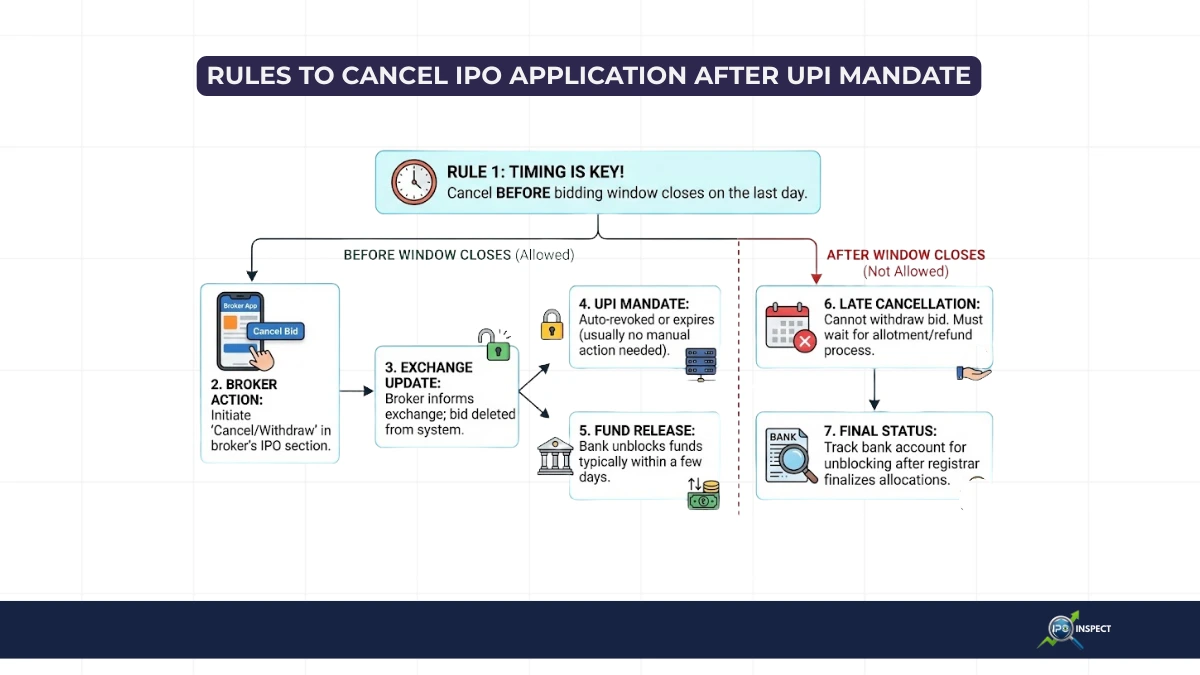
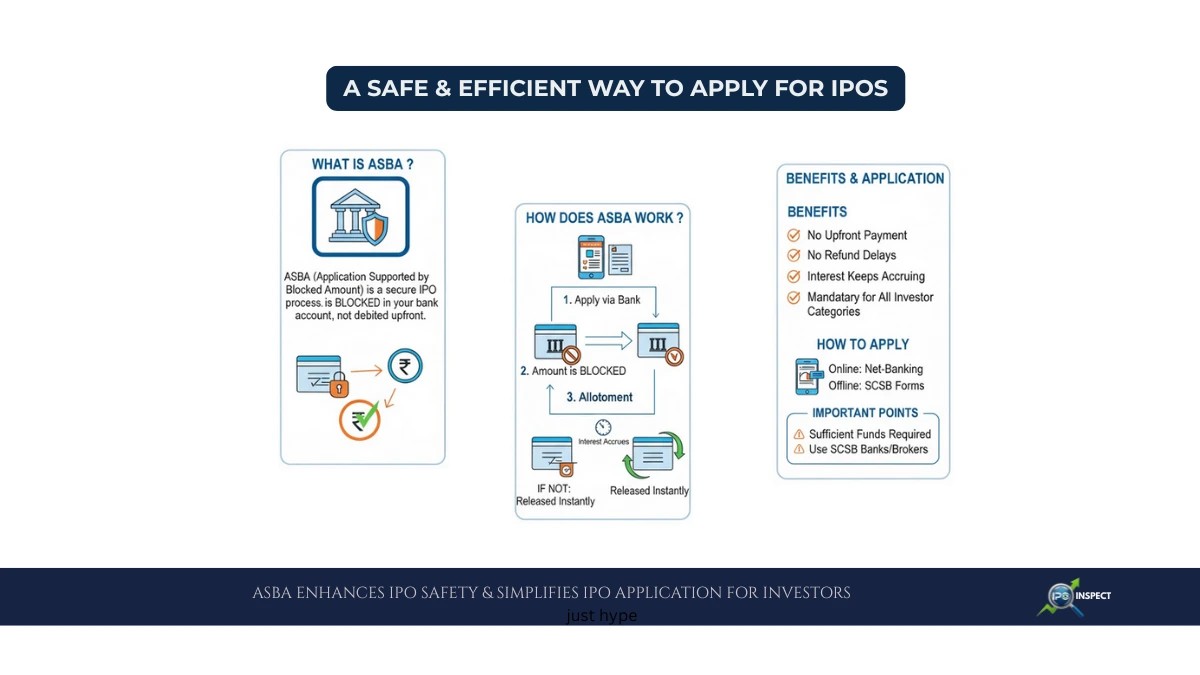
ASBA is an IPO application process where the application money remains in your bank account but is blocked (or put on hold) for the IPO subscription amount until shares allotted or rejected.
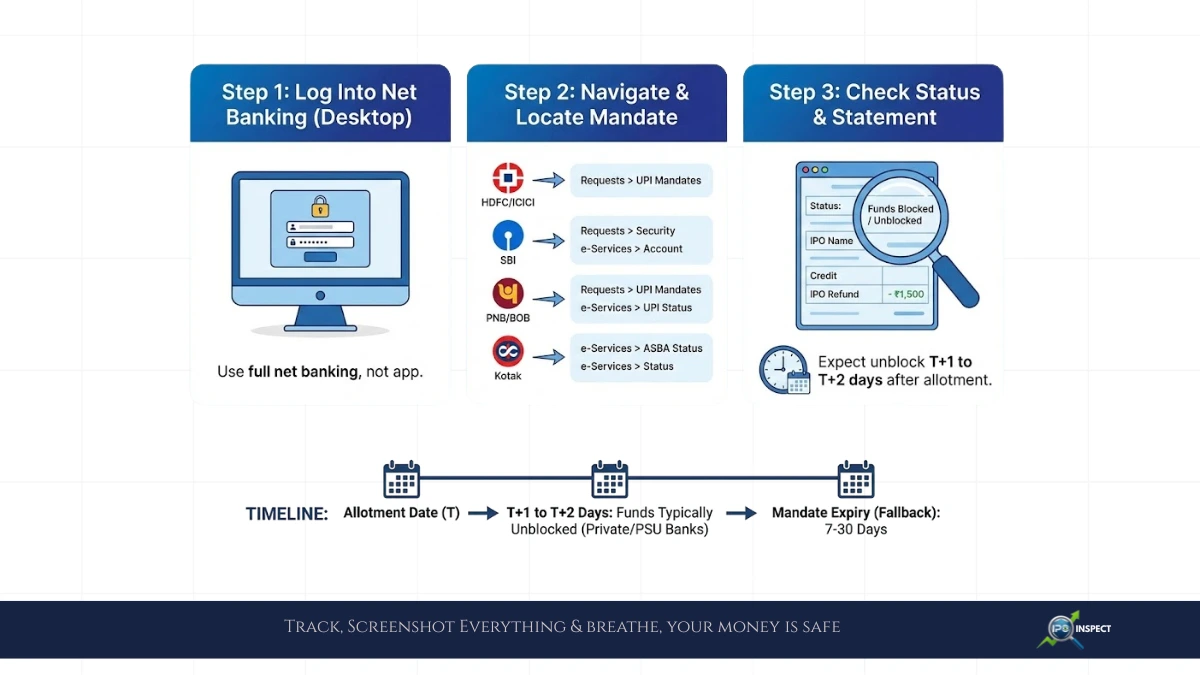
If allotted, the respective amount debited, if not allotted fully, the blocked amount released back to the account instantly.
This process minimizes inconvenience by avoiding upfront payments and delay in IPO refund after IPO allotment.
How does ASBA Work?
- You submit the IPO application through a Self Certified Syndicate Bank (SCSB) or using net banking with ASBA facility.
- The bank blocks the required application amount in your account but does not debit immediately.
- On IPO allotment, the allotted amount debited, and the balance released instantly.
- You continue to earn interest on the blocked amount while funds held.
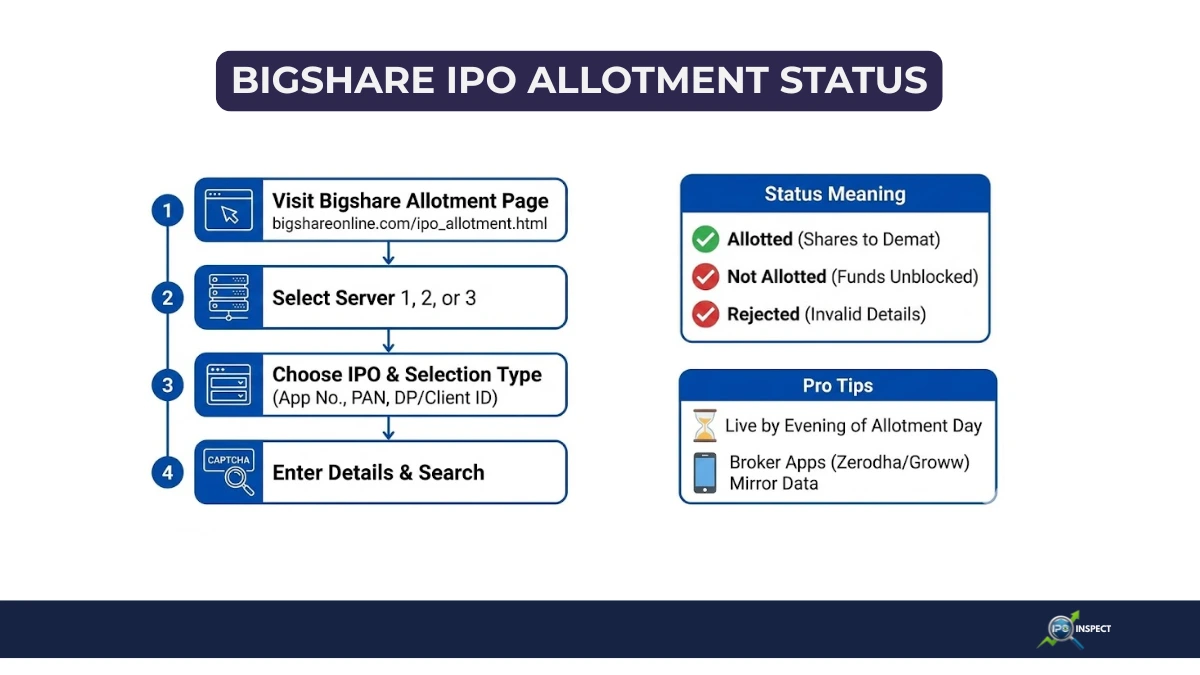
To understand the entire share allocation process in an IPO, refer to our comprehensive explanation of IPO share allotment.
Benefits of Applying IPO through ASBA
- No upfront payment: Your funds remain in your bank account, increasing safety and convenience.
- No refund delays: No waiting for refunds as money remains blocked, not credited to the issuer upfront.
- Interest keeps accruing on the blocked amount until debited.
- Simplifies fund management: Only required funds blocked, unblocked ones remain available.
- Mandatory for all categories: Retail, Non-Institutional, and Qualified Institutional Investors must use ASBA for IPOs to improve compliance and transparency.
Want to know your limits when applying for an IPO? We’ve answered this in our resource on maximum lots allowed per IPO application. For investors curious about payment options, note that you cannot use a credit card for IPO applications, find details and alternatives in our article about applying for IPOs with a credit card in India.
How to Apply IPO through ASBA?
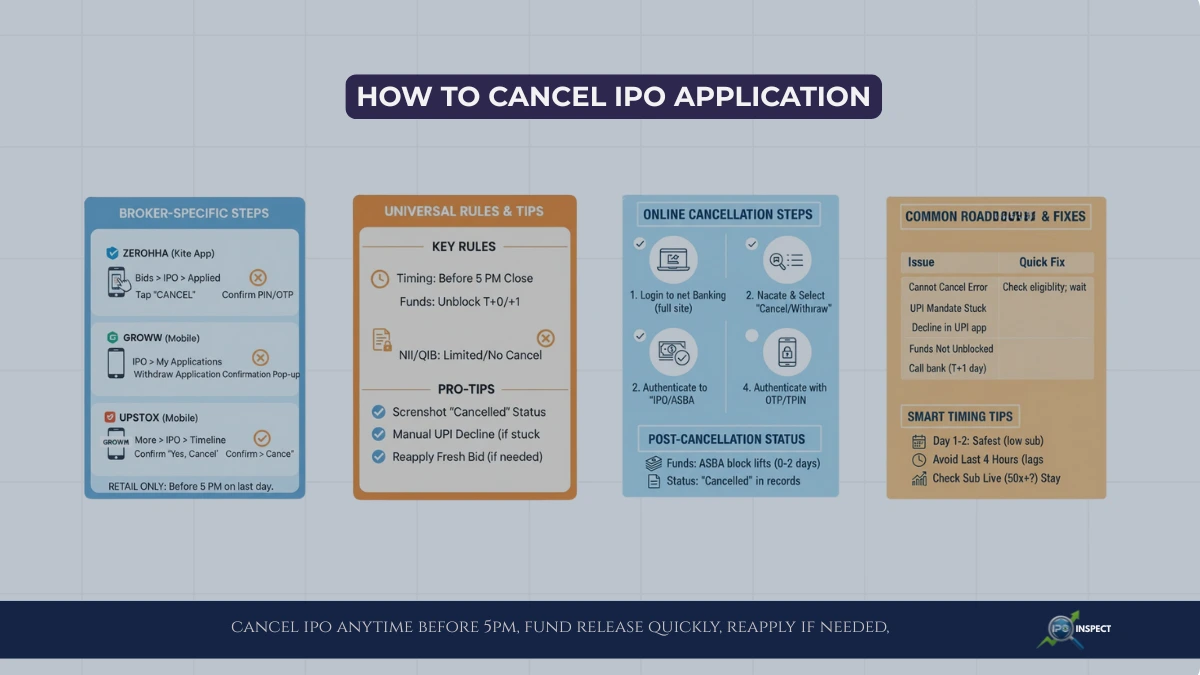
- Online through your bank’s net-banking app or website offering the ASBA facility.
- Offline by submitting physical ASBA application forms at SCSBs on or before the IPO closing date.
Important Points to Remember on ASBA
- Make sure you maintain sufficient funds in your account to cover the blocked amount.
- Accurately fill in your PAN, Demat Account, and application details to prevent errors. Discover top reasons for IPO allotment rejections and learn how to avoid them.
- Always use authorized banks and registered brokers to ensure your ASBA application is valid and meets SEBI rules for using two demat accounts for IPO application.
- Remember, IPO applications must be submitted during market hours, check specific timings and guidelines on applying for IPOs after market hours.
- For rules about the number of bids you can make for an IPO, you may check IPO bid quantity limits. But if your application is rejected due to UPI mandate errors, our UPI error and solution for IPO applications covers how to resolve them.
- Understand how oversubscription impacts IPO allotment by reviewing IPO allotments in oversubscribed issues.
Conclusion: ASBA enhances IPO investment safety by blocking funds instead of upfront debiting, offering streamlined refund handling, and ensuring regulatory compliance. Investors should prefer ASBA applications for a smooth IPO application experience in India.