IPO share allotment is the process of distributing the company’s shares to investors after the IPO subscription period closes.
Understanding how shares allotted in IPO helps investors know why they may get full, partial, or no allocation based on demand, what happens when an ipo is oversubscribed and regulatory guidelines.
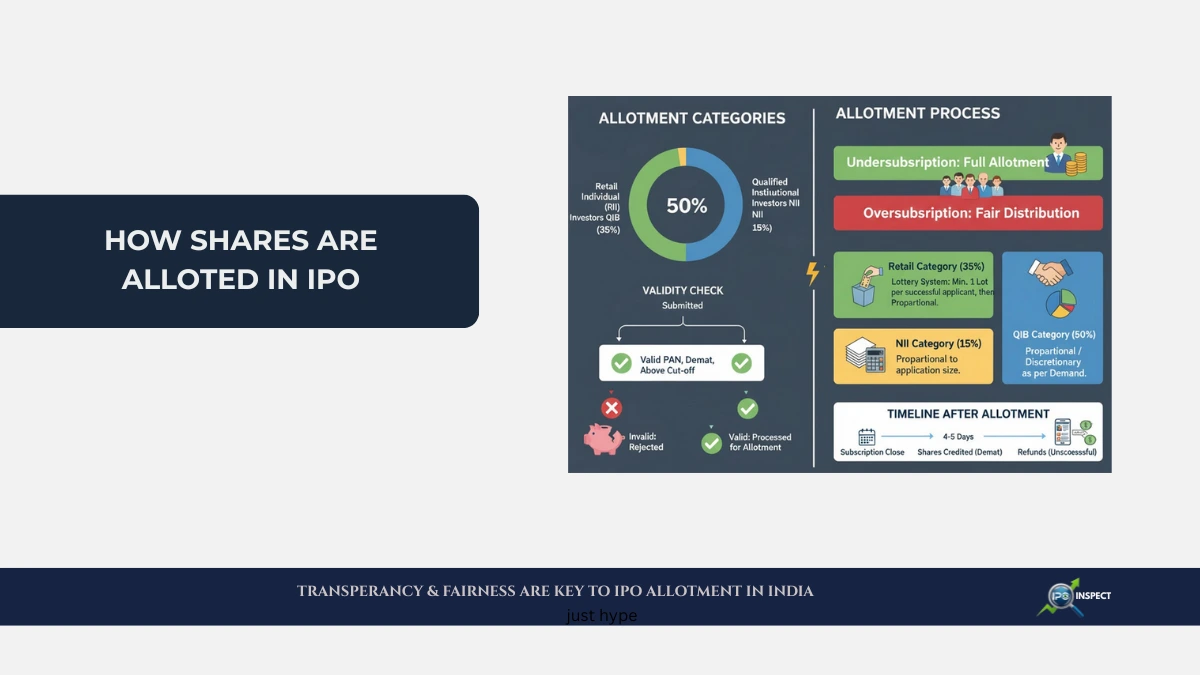
IPO Allotment Categories
Shares in an IPO allocated across investor categories:
- Retail Individual Investors (RII): Typically get 35% of the total shares in the public offer and often apply using What is ASBA in IPO through their banks or brokers.
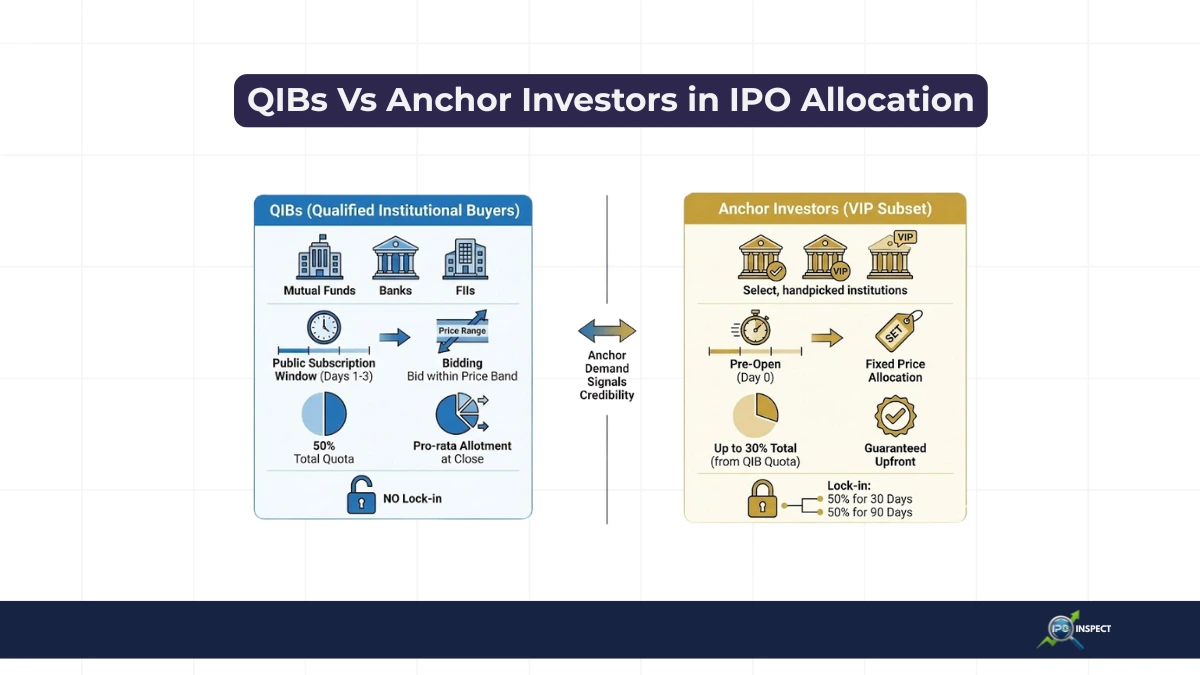
- Qualified Institutional Buyers (QIB): Usually allocated around 50%, and the QIB category in IPO plays a major role in signalling institutional demand..
- Non-Institutional Investors (NII): Allotted roughly 15% and include the NII category in IPO, such as HNIs applying with higher ticket sizes.
Each category has its reserved quota, which affects allotment rules.
Validity Check of Applications
The registrar, appointed by the company, first verifies applications for:
- Valid PAN and Demat account linkage.
- No multiple applications with the same PAN in the same category.
- Bids at or above the cut-off price in IPO, keeping in mind the difference between cut-off price and bid price decided within the price band.
- Invalid applications rejected upfront.
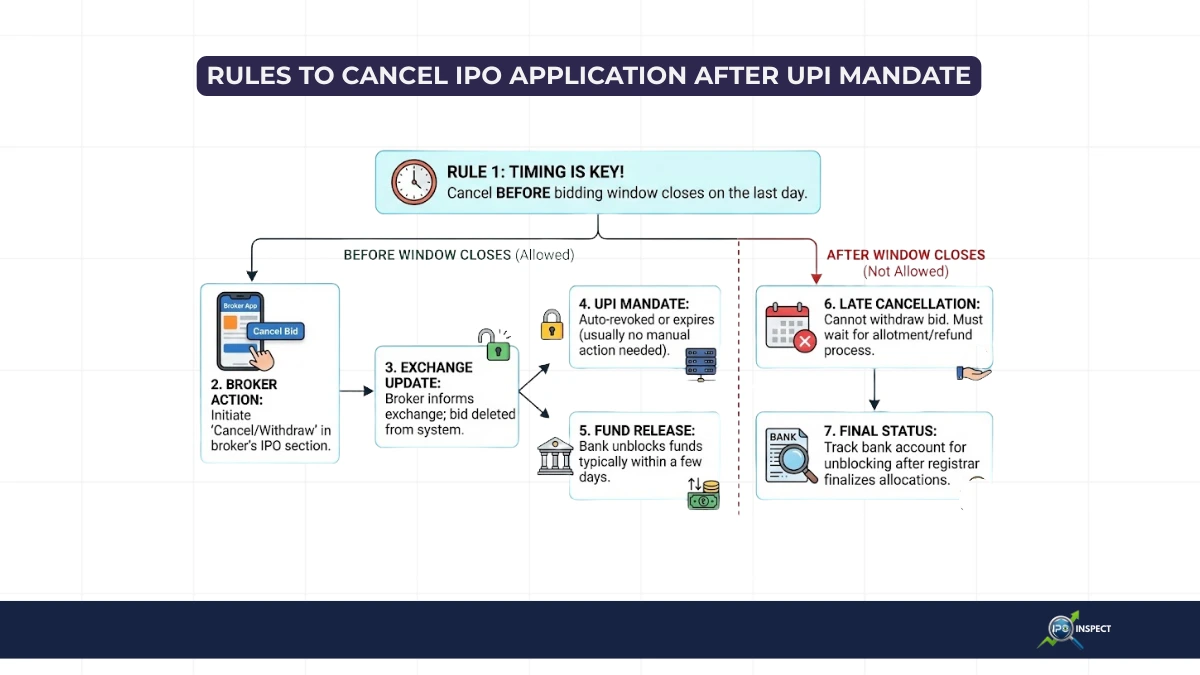
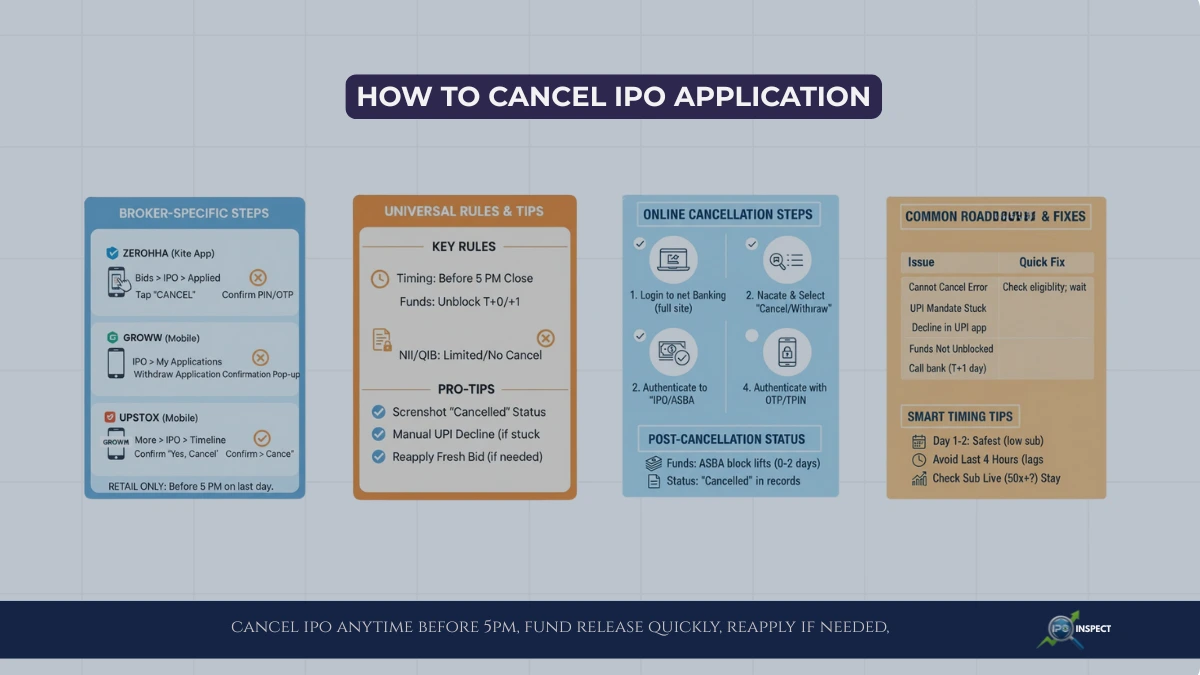
- Applications must carry a valid IPO mandate and UPI approval wherever applicable, errors here can lead to rejection.
IPO Allotment Process in Case of Undersubscription
If the IPO is undersubscribed in a category, all valid investors get full allotment. If the overall IPO gets less than 90% subscription, it may cancelled according to rules explained in the IPO cycle and stages of going public.
IPO Allotment Process in Case of Oversubscription
When more bids received than available shares as IPO oversubscription, a fair distribution system applied:
- Retail Category: Usually a lottery system (computerized draw) used to allocate at least one lot to each successful applicant. Remaining shares distributed proportionately.
- NII Category: Allocation made on a pro-rata basis proportional to the number of shares applied.
- QIB Category: Shares allotted are typically proportional or discretionary as per institutional demand.
Basis of IPO Allotment (BOA)
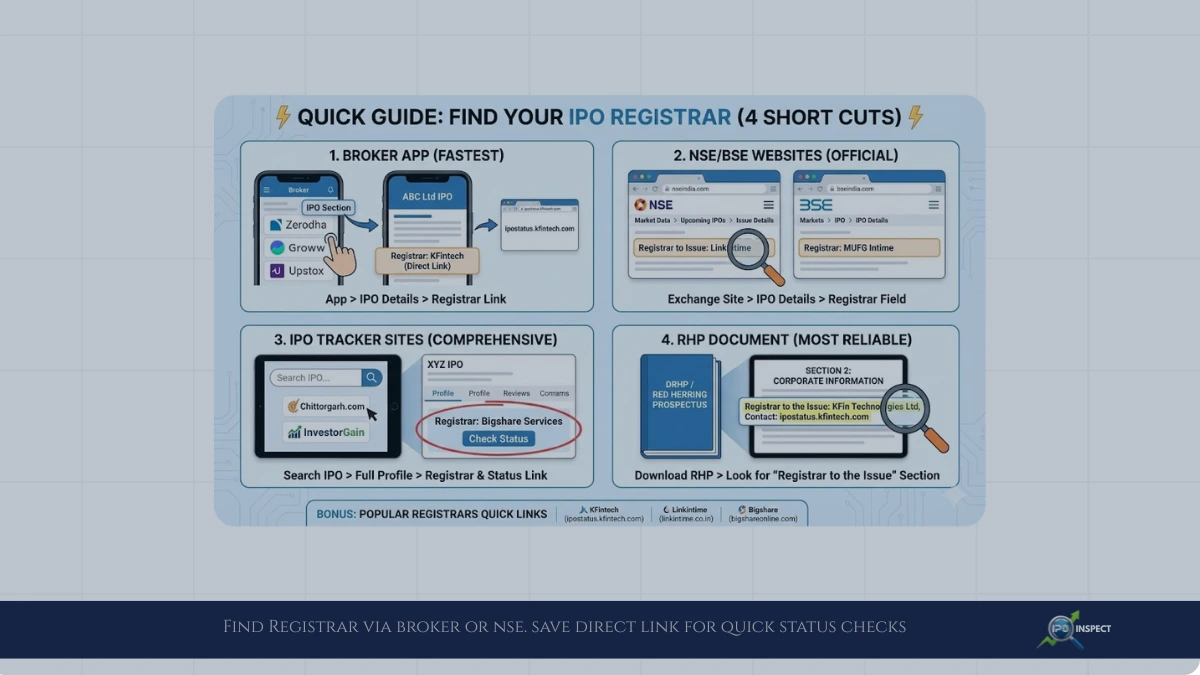
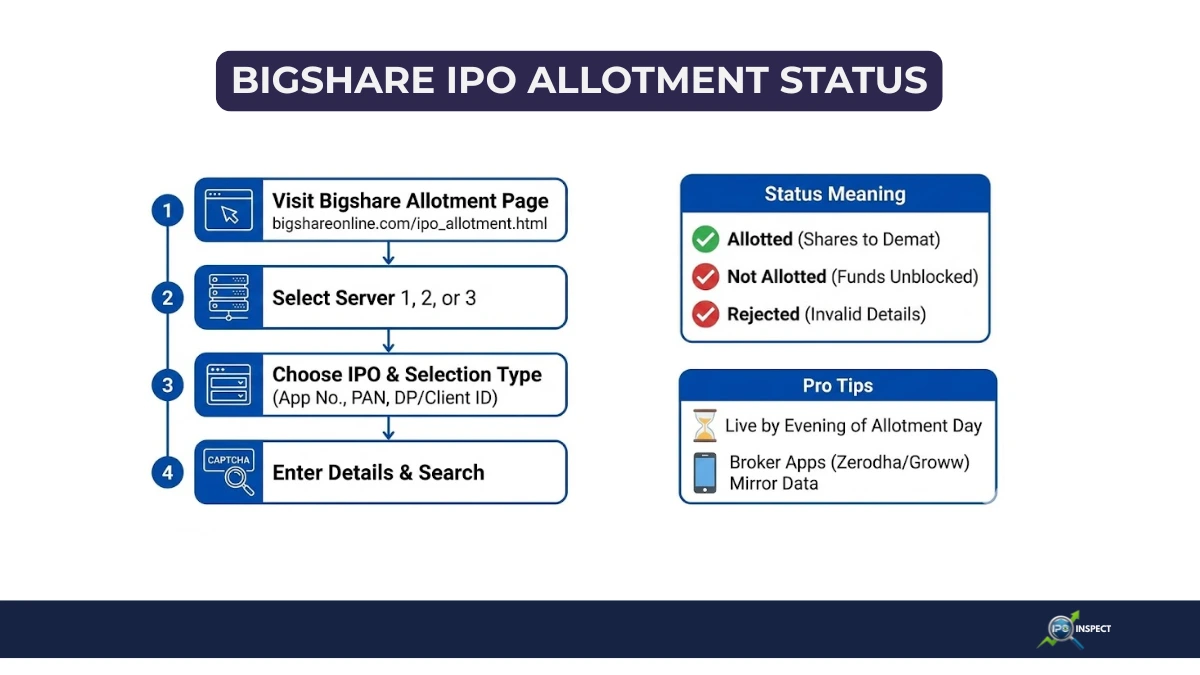
The registrar publishes the Basis of Allotment document, detailing the allotment of shares against each applicant. Investors can check their IPO allotment status on registrar or exchange websites using links provided by platforms such as KFintech or Bigshare.
Timeline After IPO Allotment
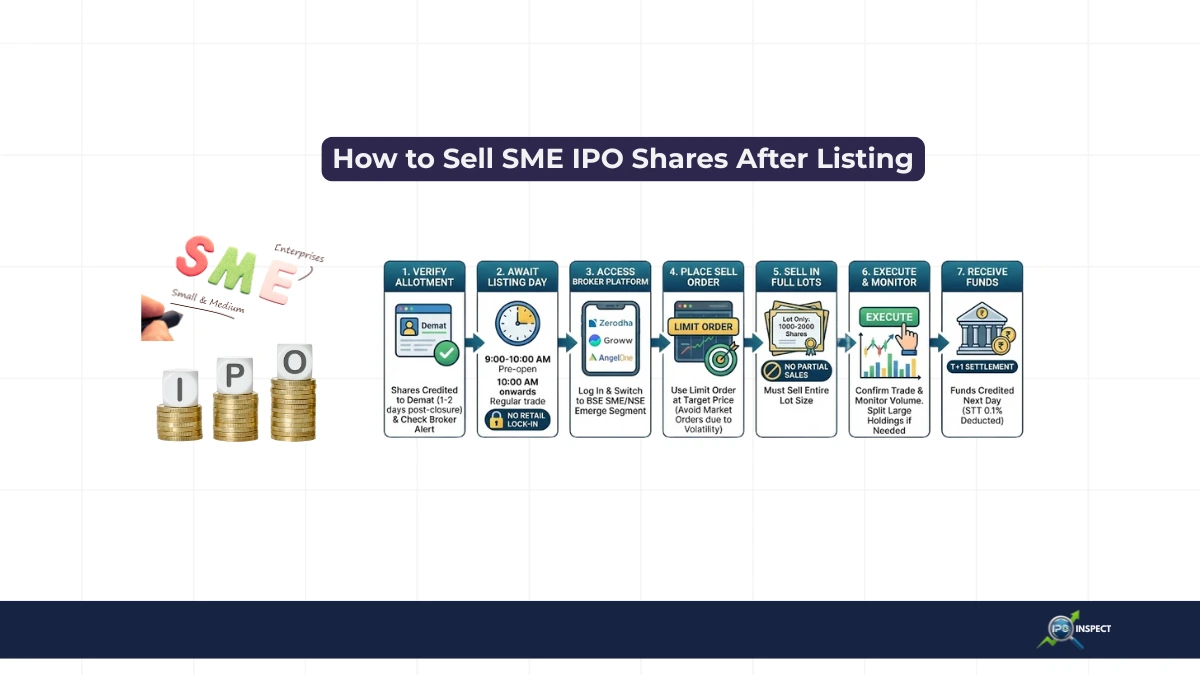
- Allotted shares credited to Demat accounts within 4-5 days post subscription close.
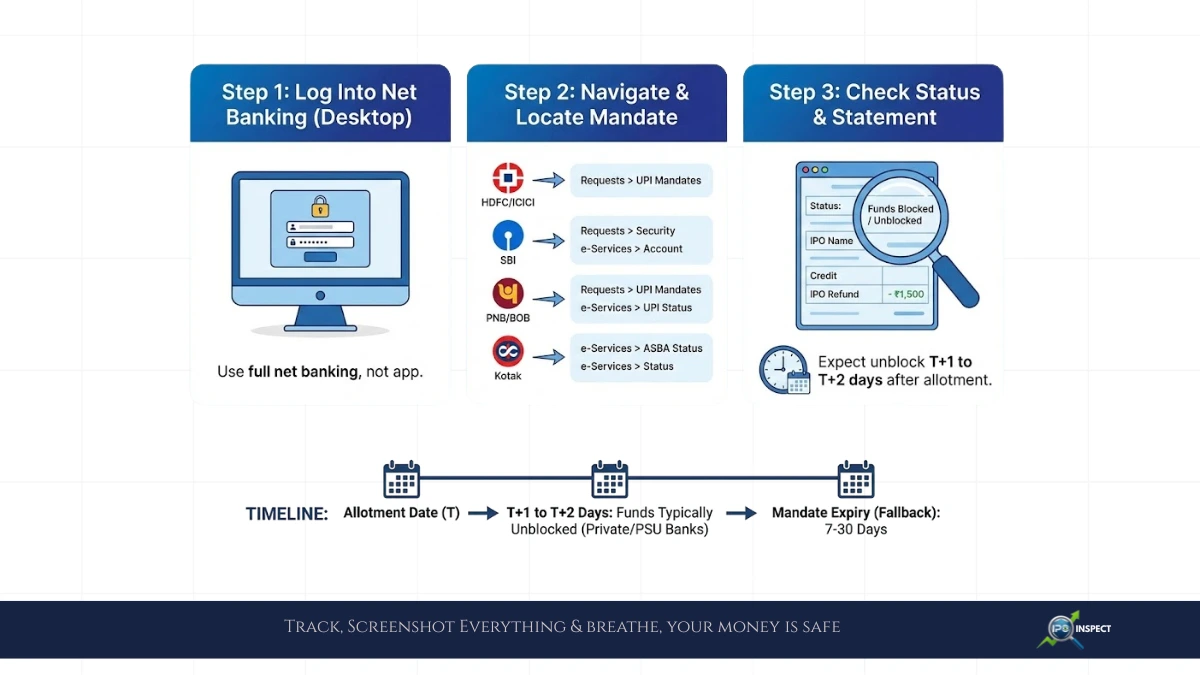
- Application money of unsuccessful bidders refunded promptly, and investors can track this through IPO refund status updates with their bank or broker..
Example Scenario
If 10,000 retail investors apply for 100,000 shares with only 50,000 shares available, a lottery will allot one lot to some investors while others get rationed.
Conclusion: IPO share allotment involves category-wise reservation, application validation, and fair distribution through lottery or proportional methods. Being aware of how shares allotted in IPO helps investors set realistic expectations about their chances and timing of share credit.