Wondering if those hard earned ESOP shares you exercised will be frozen when your company finally goes public? It’s a common worry for employees, especially with IPO buzz heating up.
The short answer is no mandatory SEBI lock-in for current employees ESOP shares post-IPO listing, but there are nuances depending on your status and company policy. Let me break it down plainly.
The Basic Rule – No Lock-in for Active Employee ESOPs
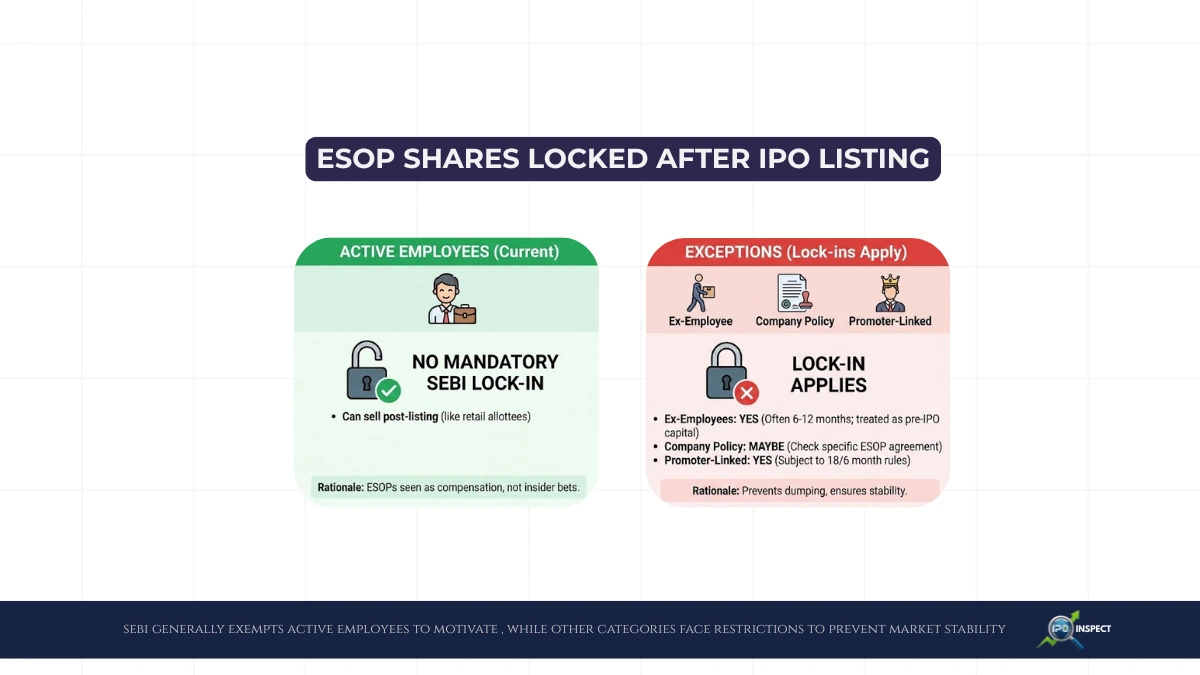
If you’re still working at the company when shares list:
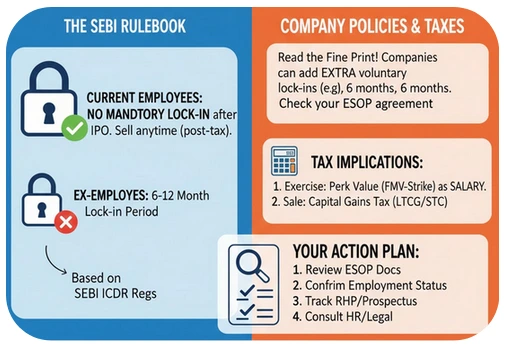
- Current employees get a SEBI exemption, no mandatory IPO lockin period applies to ESOP shares exercised before or around the IPO.
- You can sell on listing day (or whenever), just like retail IPO allottees who face no lock-in restrictions.
This keeps things fair, ESOPs are meant to motivate, not handcuff.
Exceptions that Trip People Up
Not everyone skates free. Here’s where lock-ins kick in:
| Scenario | Lock-in Applies? | Duration/Details |
|---|---|---|
| Active Employees | No | Sell freely post-listing |
| Ex-Employees | Yes | Often 6-12 months from allotment date, SEBI treats as pre-IPO shares like early institutional investors |
| Company Policy | Maybe | Some firms add voluntary 6-12 month holds via ESOP agreements |
| Promoter-Linked ESOPs | Yes | Falls under promoter 18/6 month rules |
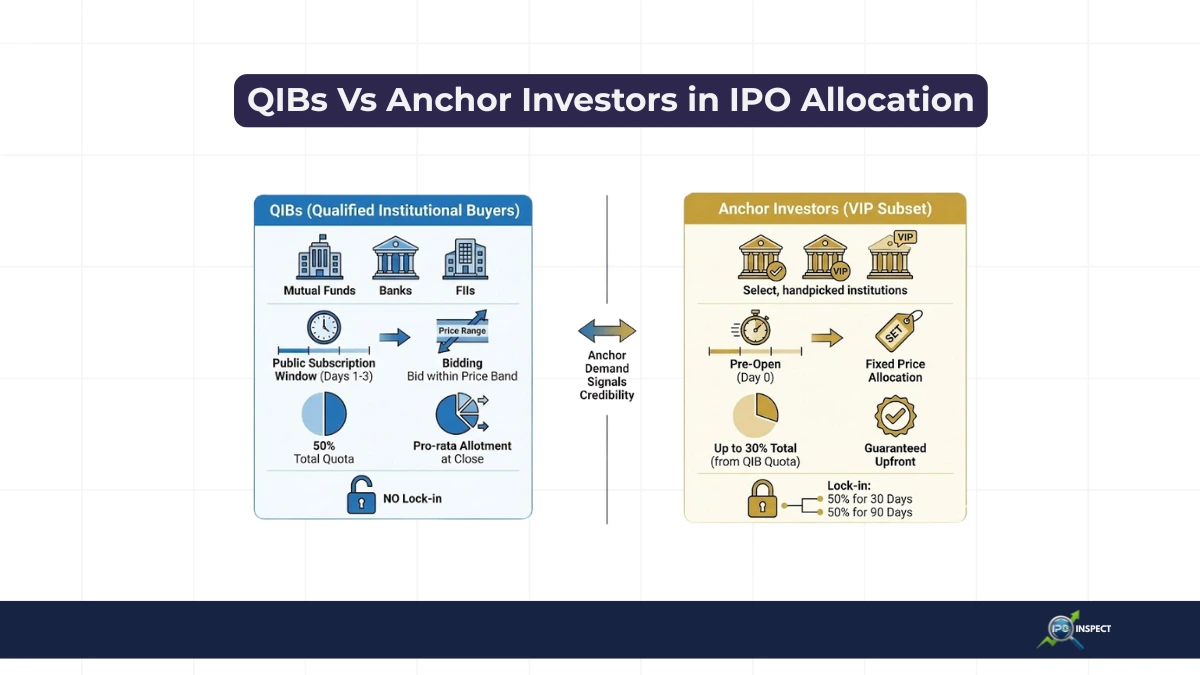
These ex-employee shares often fall under the same 6-month lock-in rules applied to QIBs and NIIs in the IPO structure.
Ex-employees get hit hardest, SEBI views their shares as pre-existing capital, locking them like early investors.
Why SEBI Makes this Distinction
Lock-ins prevent insiders dumping shares Day 1 and crashing prices. Promoters (18 months min 20% holding), anchor investors (30/90 days), and pre-IPO VCs (6 months) all stay put to stabilize post-listing prices. ESOPs for active staff? Different story, they’re compensation, not insider bets.
Real-World Examples from Recent IPOs
- Tech unicorns: Employees cashed out listing day gains freely (post-tax), tracking their performance among best performing IPOs post-lock-in expiry.
- Older cases: Ex-MCX staff fought (and lost) 1-year lock-in battles.
- Voluntary locks: Some startups add 6-month clauses to align teams long-term.
Check your ESOP agreement, companies can (and do) layer extra restrictions.
Tax Hit When You Sell (Quick Note)
No lock-in doesn’t mean no taxes:
- Exercise: Perk value (FMV – strike) taxed as salary.
- Sale: LTCG/STCG on gains from FMV at exercise, following specific tax implications for employees selling IPO shares.
Plan around both when timing your exit.
What You Should Do Right Now
- Review ESOP docs for company-specific lock-ins.
- Confirm employment status on allotment day, exiting pre-IPO changes everything.
- Track RHP/Prospectus and DRHP disclosures for ESOP pool details and pre-IPO shareholding patterns.
- Talk to HR/Legal if unsure, better safe than surprised.
- Understand your position within the broader IPO cycle stages, especially the employee category allocation and ESOP pool mechanics.”
Bottom Line:
ESOP exercised shares are NOT locked after IPO listing for current employees under SEBI rules. Ex-staff face 6-12 month holds, company policies might add more. It’s your reward, claim it wisely, but read the fine print first.