Listing gain in an IPO refers to the profit an investor makes when the stock price of a newly listed company on its first trading day is higher than the IPO issue price.
It represents immediate returns from the stock’s market debut and is a key attraction for IPO investors looking for quick profits.
This article explains the concept, how to calculate listing gains, and factors affecting them.
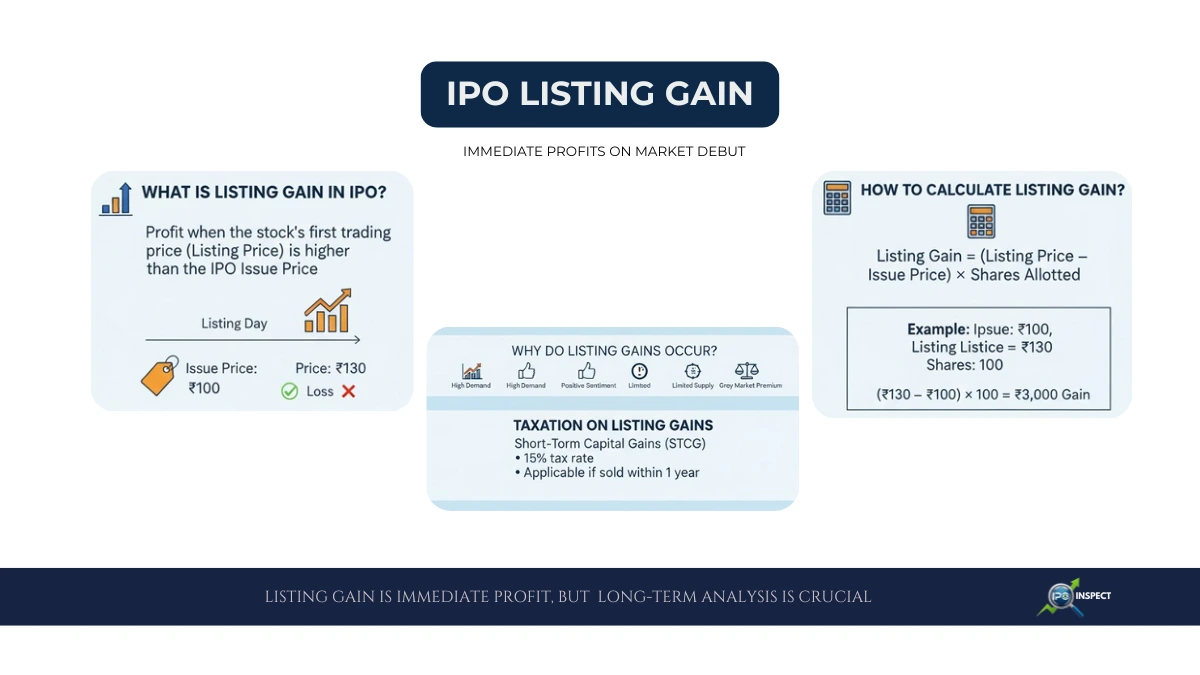
What is Listing Gain in IPO?
The listing gain is the difference between the IPO issue price (the price at which shares allotted) and the listing price (the price at which the shares start trading on stock exchanges on listing day).
- If the listing price is higher than the issue price, investors make a listing gain.
- If it’s lower, the investor incurs a listing loss.
The process that determines listing price on the stock exchange day involves several market mechanisms and investor sentiment impacts.
How to Calculate Listing Gain?
Listing Gain = (Listing Price – Issue Price) * Number of Shares Allotted
Example:
- IPO Price: ₹100 per share
- Listing Price on Day 1: ₹130 per share
- Shares allotted: 100
Listing Gain = (₹130 – ₹100) × 100 = ₹3,000
This means the investor earned ₹3,000 profit if shares sold at listing price.
To understand real-world outcomes, see examples of listing gains from recent IPOs.
Why do Listing Gains Occur?
- High demand for shares leading to price premiums on listing.
- Positive market sentiment and confidence in company fundamentals.
- Positive listing gains are often associated with broader bull market trends in India.
- Limited supply vis-à-vis oversubscription.
- Grey Market Premium (GMP) indicating demand strength pre-listing.
Importance of Listing Gains for Investors
- Listing gains are often a key motivation for retail investors subscribing to IPOs.
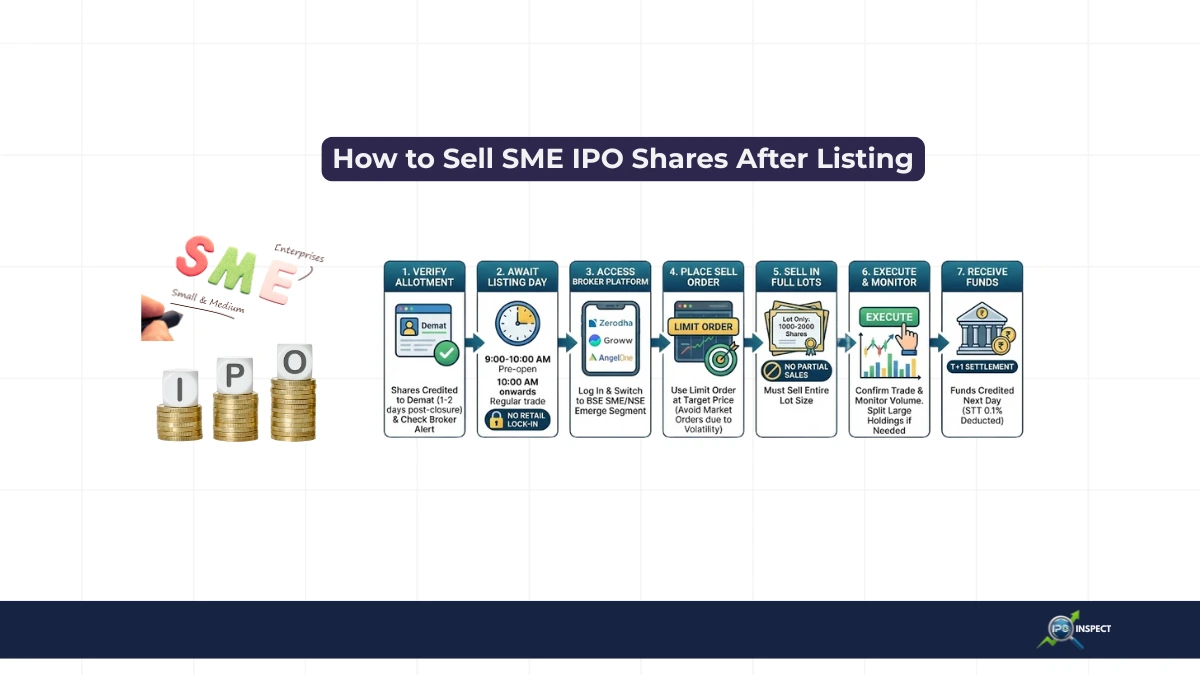
- Represents instant realized profit if shares sold on the listing day.
- However, listing gains not guaranteed and share prices may also decline post-listing.
Taxation on Listing Gains
- In India, listing gains considered Short-Term Capital Gains (STCG) if shares sold within one year.
- STCG tax rate on equity shares is 15% plus applicable cess and surcharge.
Conclusion: Listing gain is the immediate profit or loss an investor experiences when IPO shares start trading publicly, measured by the difference between listing and issue prices. While attractive, investors should also consider long-term potential and market risks beyond listing day gains. To evaluate whether to hold for the long-term or capitalize on listing gains, utilize IPO analysis methods.
For insights on sustained success after listing, investors can review data on best performing IPOs over multiple years.