The IPO listing price is the price at which shares of a company start trading on stock exchanges on their listing day.
Unlike the IPO issue price fixed during subscription, the listing price is influenced by factors such as the IPO price band and is ultimately determined by market forces during a special pre-open session on listing day.”
Understanding how this price is arrived at helps investors gauge market sentiment and expected listing gains.
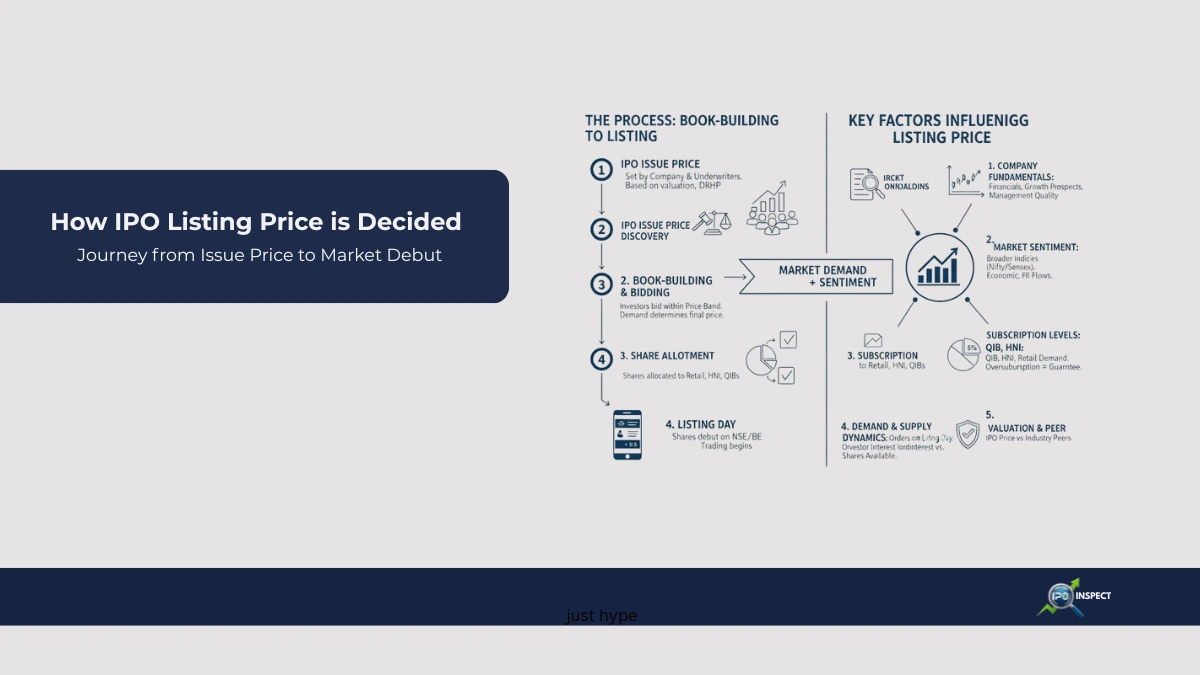
IPO Pricing vs Listing Price
- Issue or Offer Price: Decided by the company and underwriters before IPO launch, typically via book-building or fixed price methods, communicated in the prospectus.
- Listing Price: The actual equilibrium price on listing day, determined by demand and supply during a pre-open price discovery session on the exchange and often compared with the stock’s IPO GMP today.
IPO Price Discovery Process on Listing Day
- Pre-Open Session:
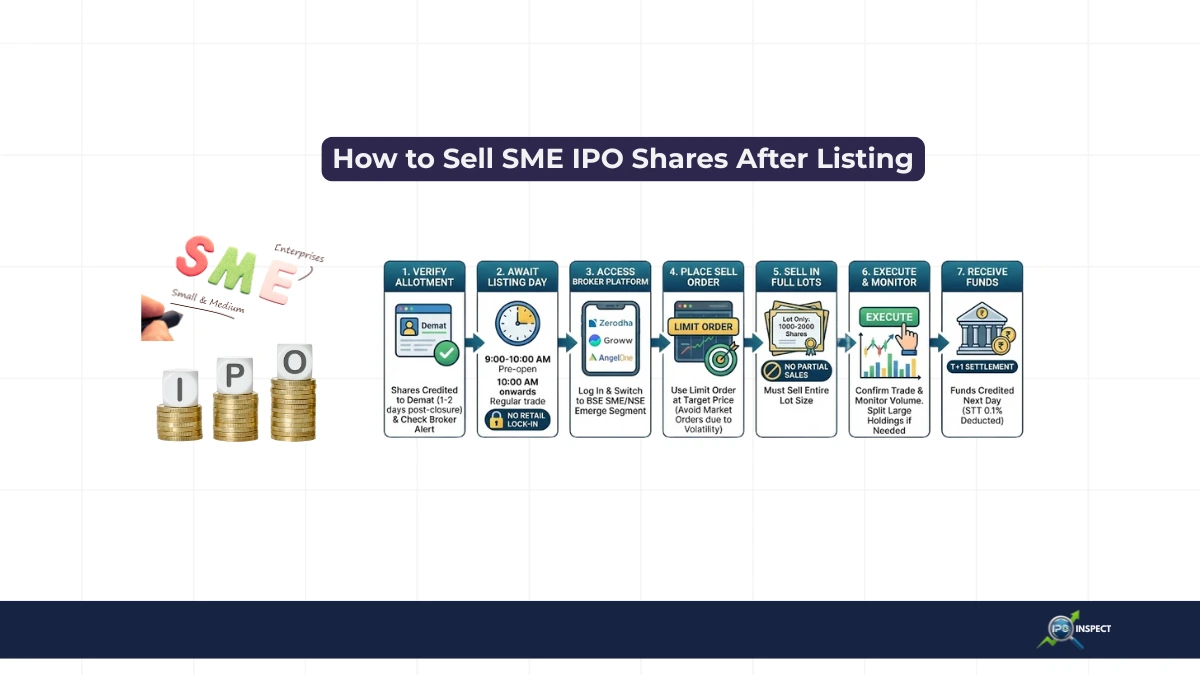
On listing day, exchanges run a 10-minute pre-open trading session (usually 9:45 AM to 9:55 AM), following the broader IPO cycle stages and process that start from offer launch to final listing.
Investors place buy and sell orders at various price levels for the IPO stock. - Equilibrium Price Determination:
The exchange’s system matches buy and sell orders to find a price at which maximum shares traded, called the equilibrium price, this becomes the official listing price. - Circuit Limits:
To avoid extreme volatility, stock exchanges set circuit filters (price bands) on listing day restricting price movement within certain percentages of listing price, e.g., +/- 5% for issues up to ₹250 crores, which is especially relevant when IPO GMP reflects strong market sentiment.
Key Factors Influencing IPO Listing Price
- Subscription Levels and GMP: Oversubscription often boosts demand and listing price. GMP in the grey market indicates pre-listing demand sentiment.
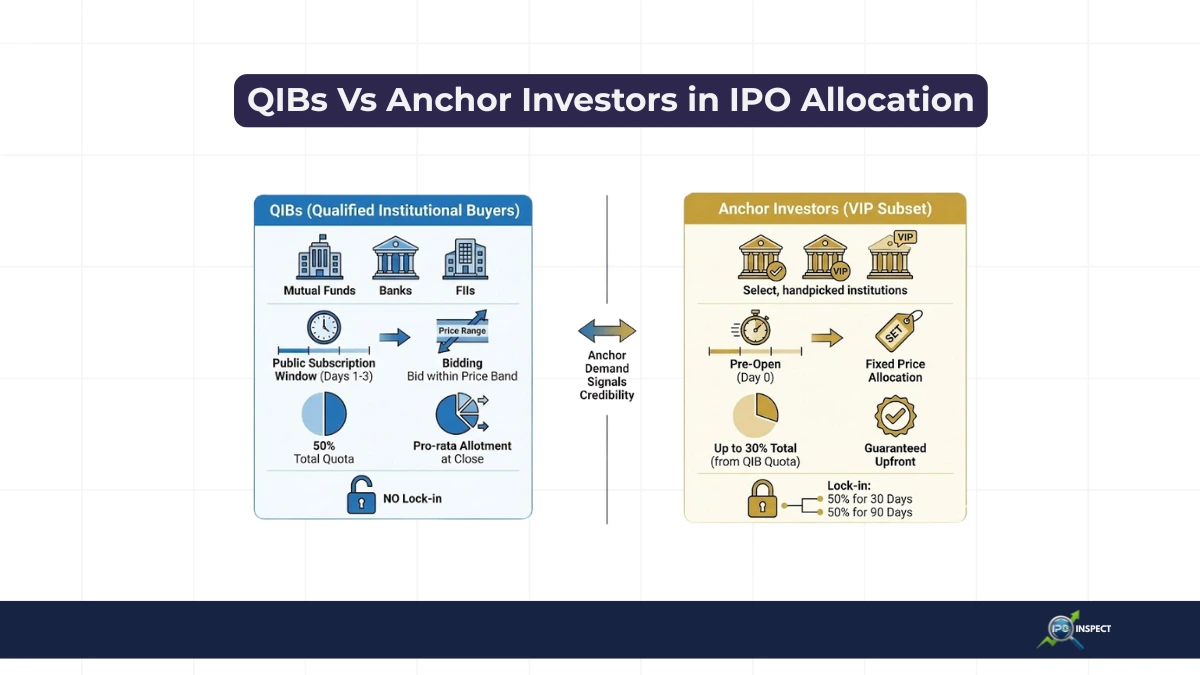
- Investor Interest: Strong institutional and retail demand on listing day pushes prices up particularly in issues that later rank among the best highest listing gain IPO in India.
- Market Conditions: Overall equity market mood impacts listing price positively or negatively.
- Company Valuation and Fundamentals: Long-term prospects influence willingness to buy and price levels and can be evaluated using a structured approach about how to analyse IPO.
- Price Band and Cut-off Price: Final offer price band limits bid prices, influencing potential listing price range.
IPO Pricing Methods affecting Listing Price
- Book Building: Price range announced. Final cut-off price determined by bids raises expectations for listing price.
- Fixed Price: Listed shares open generally around the fixed issue price unless market forces push it otherwise.
Real-World Example
If an IPO issue price is ₹300 with strong demand and GMP ₹50, pre-open buy orders may push the listing price close to ₹350 or higher. Conversely, weak demand may result in listing closer to or below ₹300.
Conclusion: The IPO listing price a market-driven price discovered on listing day through pre-open demand-supply matching, influenced by IPO fundamentals, subscription levels, grey market sentiment, and broader market conditions. Understanding this process prepares investors for expected listing behavior and potential gains.