When the demand for an IPO exceeds the number of shares offered, the IPO is said to be oversubscribed.
This scenario is common in popular IPOs, and the allotment process becomes crucial to ensure fair distribution among investors.
This article explains how IPO allotment is calculated during oversubscription, the role of lotteries and pro-rata allocation, and what investors should expect.
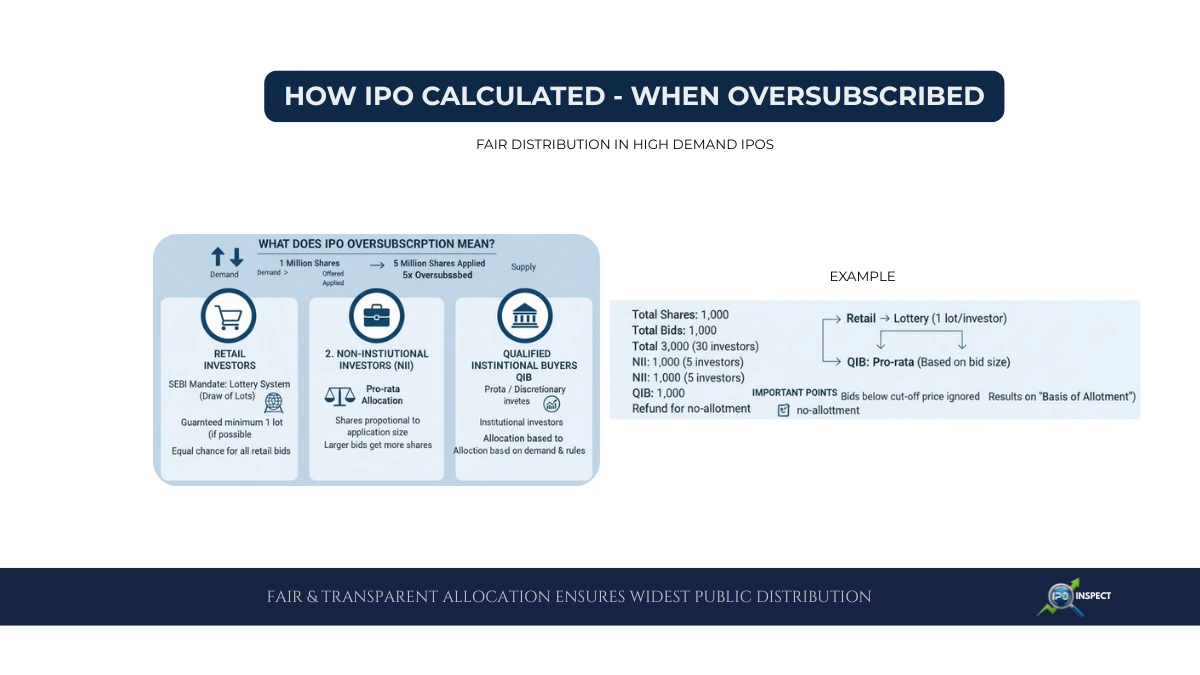
What does IPO Oversubscription mean?
Oversubscription occurs when the total number of shares applied for by investors often visible in current IPO GMP trends surpasses the shares available in the IPO.
This scenario is common in popular IPOs, which are often driven by factors influencing high listing gains. The allotment process becomes crucial to ensure fair distribution among investors.
For example, if 1 million shares are offered but 5 million shares are applied for, the IPO is oversubscribed 5 times.
Allotment Methods in Oversubscribed IPOs
1. Lottery (Draw of Lots) System for Retail Investors
- SEBI mandates a computerised lottery system for the retail investor category when IPOs are oversubscribed.
- Each retail investor guaranteed at least one lot where possible.
- Remaining shares, if any, allocated proportionately or through lottery to investors who applied for more than one lot.
2. Pro-rata Allocation for Non-Institutional Investors (NII)
- Shares allocated proportionally based on the size of bids in the NII category.
- Investors receive shares in proportion to their application amount relative to total bids.
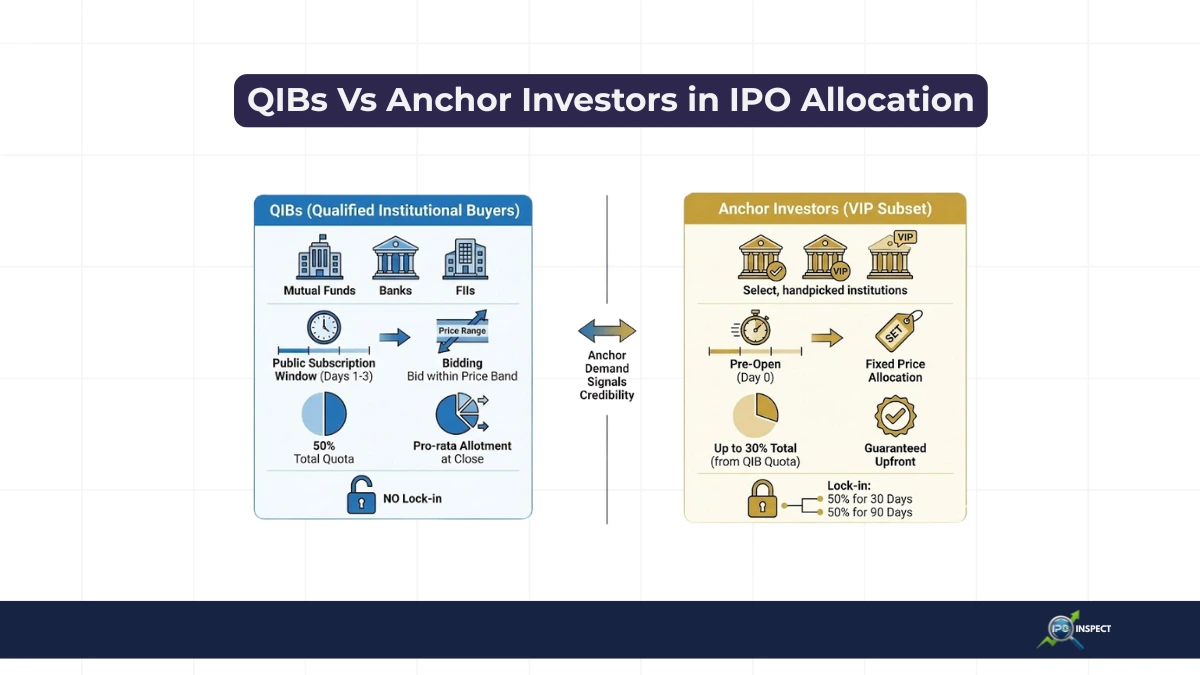
3. Allocation for Qualified Institutional Buyers (QIB)
- Institutional investors or QIBs usually get allotment on a pro-rata or discretionary basis depending on demand and regulatory approvals.
- Unsubscribed shares in QIB category generally not reallocated to retail or NII categories.
Step-by-Step Example of IPO Oversubscription Allotment
Assume:
- Total shares available: 1,000
- Total bids received: 5,000 shares
- Retail investor bids: 3,000 shares for 30 investors
- NII bids: 1,000 shares for 5 investors
- QIB bids: 1,000 shares for 2 investors
Retail category:
- Each of the 30 investors will get one lot first via lottery.
- Remaining shares, if any, may allocated proportionately or by lottery among larger applicants.
NII category:
- Investors get shares proportional to the amount they bid.
QIB category:
- Allocation depends on negotiations and demand but is generally proportional to bids.
Important Points to Note
- Bids below the cut-off price (the final issue price) are not considered in allotment, where common reasons for IPO allotment rejections can also impact results.
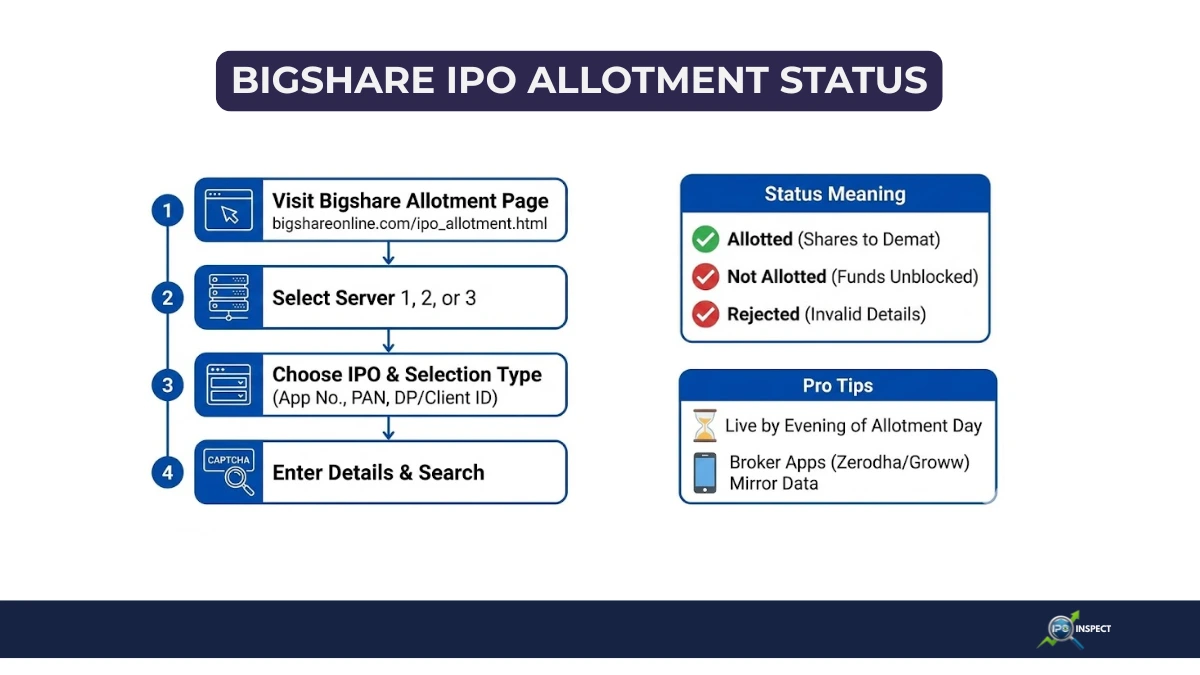
- Allotment results, published as the “Basis of Allotment” after IPO closure, are part of the overall IPO cycle stages reflecting how offerings move from launch to listing.
- If no allotment, invested funds refunded.
Conclusion: IPO shares allotted fairly through a lottery and/or pro-rata system during oversubscription, ensuring widest possible distribution. While retail investors face luck-based allotment, institutional investors get proportionate shares. Understanding this process helps set expectations for IPO applicants, including insights on how the IPO listing price is decided.