Curious about that price band you see mentioned in every IPO announcement? It’s not just jargon, it’s the key range that shapes how much you’ll pay if you get shares.
Let me walk you through what a price band in IPO really means, why companies set it, and how it affects your IPO bidding strategy.
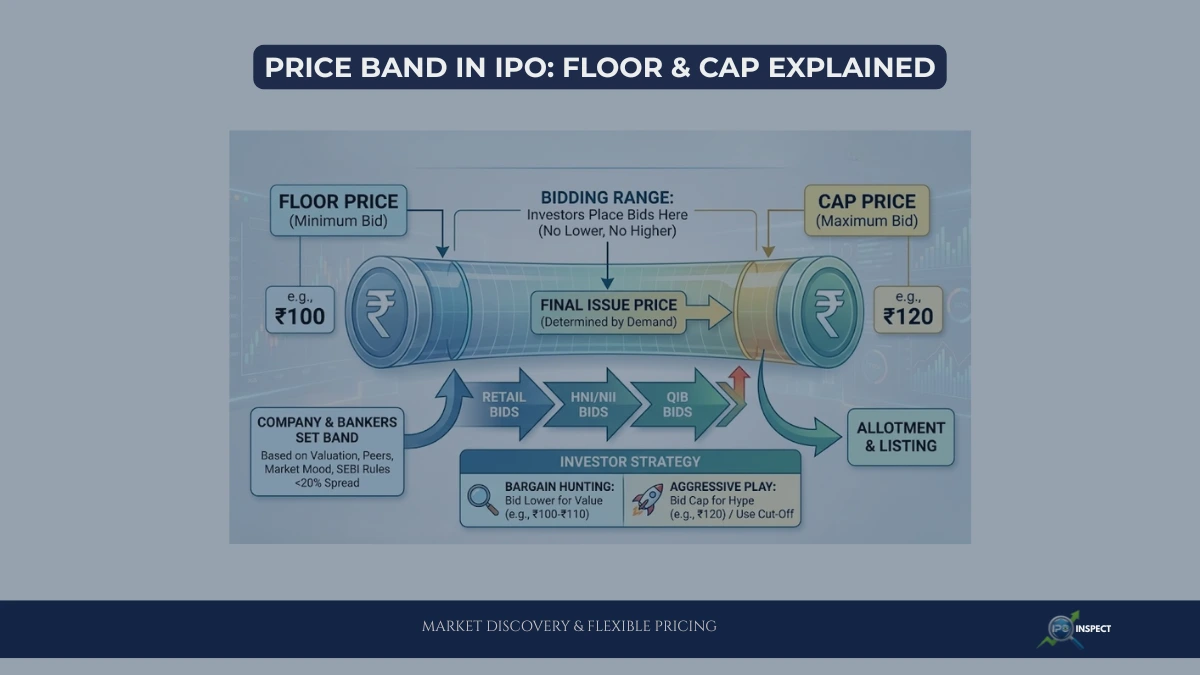
Price Band Meaning
A price band in IPO is the range between a floor price (lowest possible bid) and cap price (highest) where investors place their bids during the subscription window and eventually discover the IPO cut-off price.
For example, if the band is ₹100-₹120, you can bid anywhere from ₹100 up to ₹120 per share, no lower, no higher.
This setup lets the market discover the right price through real demand, rather than the company picking one number blindly.
This basic structure ties directly into the difference between IPO cut-off price and bid price, which decides who finally gets allotted shares.
How Price Band Gets Set and Why It Matters
Companies team up with merchant bankers to decide the band based on valuation, peer comparisons, market mood, and what similar IPOs fetched, using many of the same inputs that drives about how IPO listing price is decided and factors influencing high listing gains.
SEBI rules cap the spread at 20% (cap can’t exceed floor by more than that), keeping things reasonable.
Once bids roll in:
- Strong demand? Final issue price hits the upper end or close.
- Lukewarm interest? It drops toward the floor.
Your bid price within the band decides if you’re eligible for allotment at the cut-off, working hand in hand with the rules of how IPO shares are allotted.
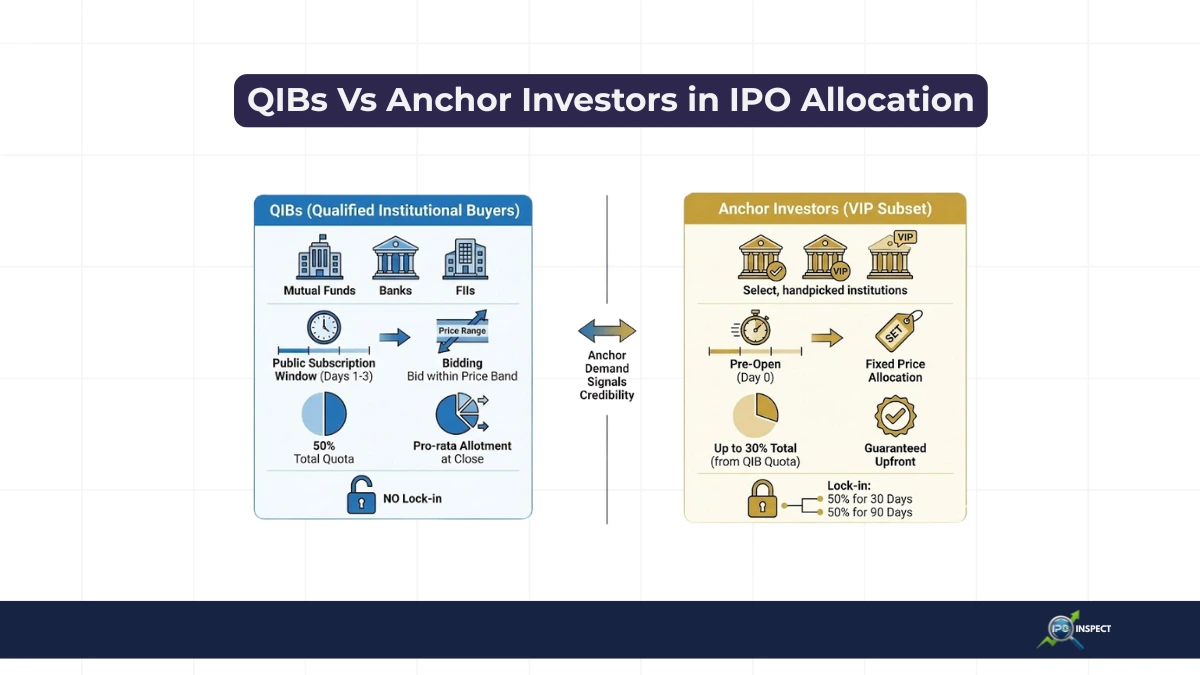
The final call also depends heavily on subscription trends across investor categories, which you can gauge by assessing IPO subscription levels and demand signatures.
Floor vs Cap Price
| Term | What It Means | Example (₹100-₹120 Band) |
|---|---|---|
| Floor | Minimum bid price | ₹100 |
| Cap | Maximum bid price | ₹120 |
Retail folks often pick cut-off (accept whatever final price emerges), typically using ASBA for IPO applications, while HNIs/NIIs bid specific levels to show conviction and manage allocations when IPO allotment calculated in oversubscribed issues.
Price Band vs Final Issue Price
The band guides bidding, but the issue price (what you actually pay) comes after analyzing all bids. It could land anywhere in the range or even get revised if underwriters adjust based on subscription heat and feedback from IPO grey market premium today.
Fixed-price IPOs skip the band altogether (just one price), but book-built ones (most big issues) rely on it for flexible pricing.
Why Price Band Strategy Wins for Investors
- Bargain hunting: Bid low in the band for undervalued IPOs after doing proper IPO fundamental analysis.
- Aggressive plays: Go cap price for hyped issues expecting listing pops, especially in sectors that have produced best-performing IPOs recently.
- Safety net: Cut-off lets you ride the wave without guessing.
Watch subscription data, if NII/QIB pile in at upper levels, that’s your cue for strong demand.
Real Example to Make It Click
Take an IPO with ₹500-₹550 band. Bids cluster at ₹540+ due to buzz, so issue price sets at ₹542.
Cut-off bidders pay ₹542, those who bid ₹520 might miss out if cut-off exceeds it.
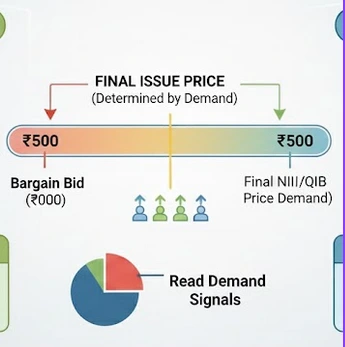
The price band in IPO is your bidding playground, floor to cap, shaped by company valuation and market vibes. Nail it by tracking grey market premiums and peer pricing, and you’ll bid smarter next time an issue opens. It’s less about the numbers and more about reading demand signals.