In the context of IPOs (Initial Public Offerings), the term “bid” refers to an investor’s offer to buy shares at a specific price within the IPO’s price range.
Placing a bid is a crucial step in the IPO application process, reflecting your intent and the price you are willing to pay for the shares.
This article explains the meaning of bid in latest IPO, how the bidding process works, and why it matters for investors.
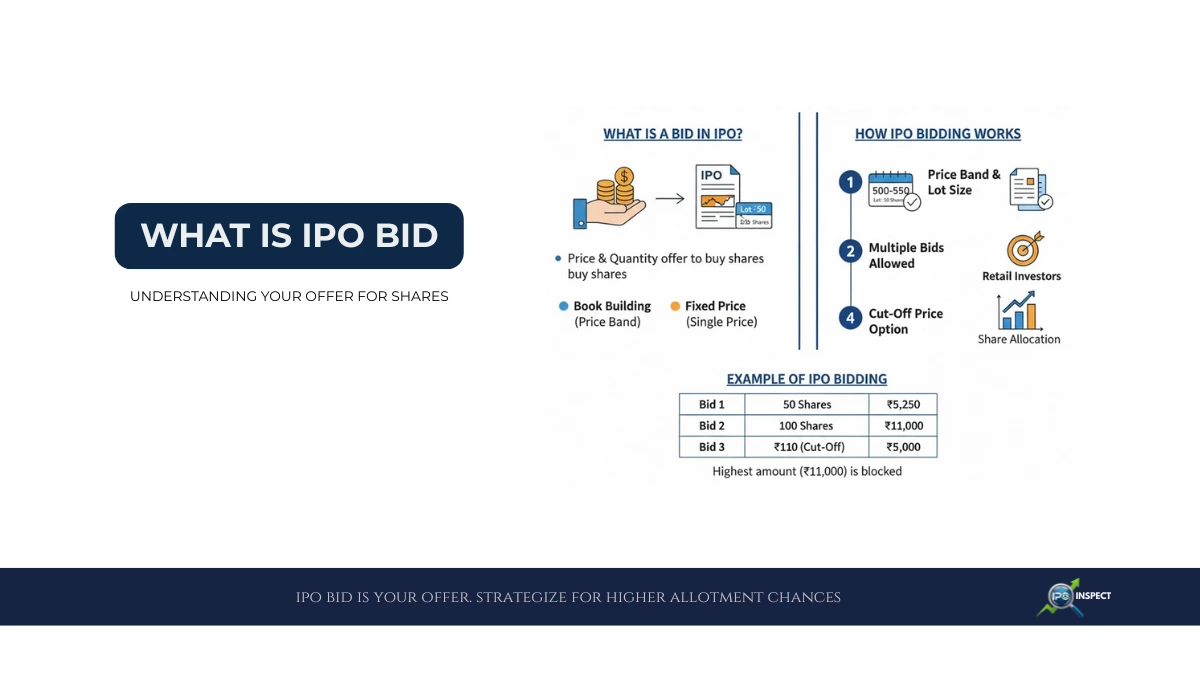
What is a Bid in IPO?
A bid in IPO is the price and quantity at which an investor applies for IPO shares during the subscription period. Depending on the IPO pricing method book building or fixed price, you can place bids as follows:
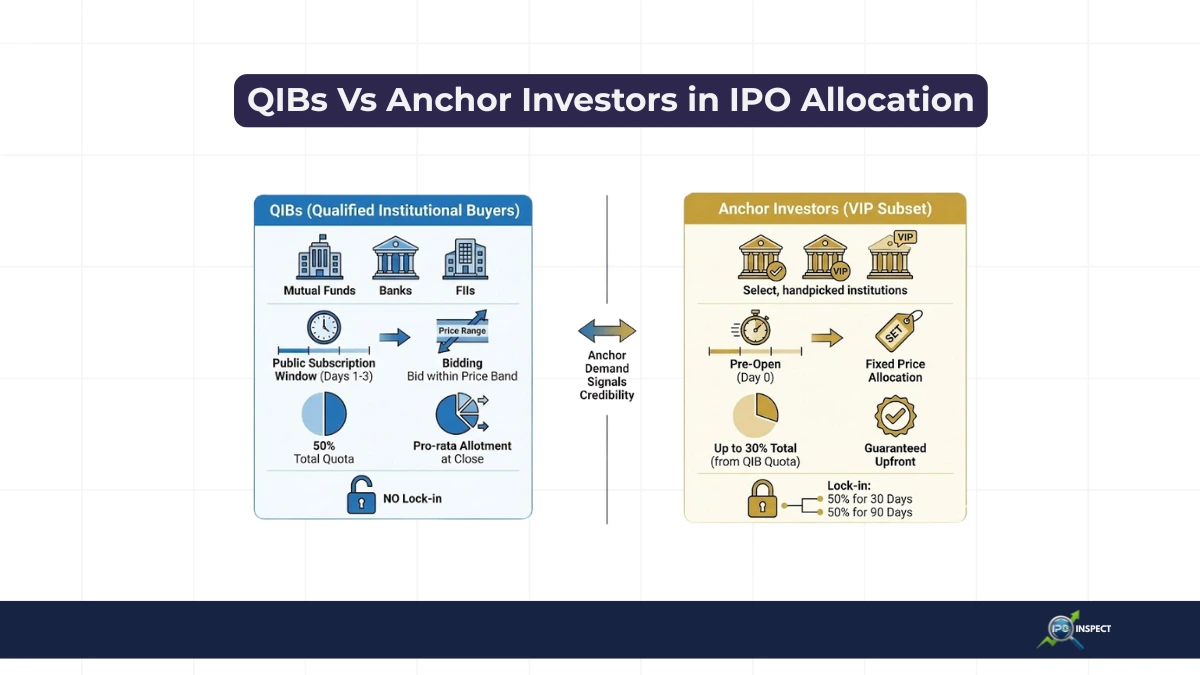
- Book Building IPOs: Bids placed within a price band (e.g., ₹500 – ₹550). You specify the number of lots and the price you want to pay within this band.
- Fixed Price IPOs: Bids placed at a single fixed price set by the issuer.
The bid represents your willingness to purchase IPO shares at your chosen price.
How does IPO Bidding Work?
- Price Band and Lot Size: The company announces a price band and lot size. Based on the number of lots you can apply during IPO, investors bid with quantity multiples of the lot size and a chosen price within the band.
- Multiple Bids Allowed: Investors can place up to 3 different bids with varying price and quantity combinations to increase allotment chances. The highest bid amount blocked during the application. Find out the maximum number of bids you can make in an IPO and key rules that apply for retail applicants.
- Cut-Off Price Option: Retail investors can bid at the “cut-off price” indicating their willingness to accept the final issue price determined after bidding closes.
- Bids and Allotment: After bid submission, final pricing concluded, and how shares are allotted in an IPO depends on demand and the price bids. The highest bid amount blocked during the application, based on how ASBA works for IPO applications.
Importance of the Bid Price
- The bid price influences your chances of allotment and the final price you pay.
- Bidding too low may reduce allotment chances; bidding at cut-off or higher increases the likelihood of allotment.
- The company uses bids to determine the final issue price, so bids reflect market demand and valuation.
Example of IPO Bidding
Suppose an IPO has a price band of ₹100 to ₹110 and a lot size of 50 shares:
| Bid No. | Quantity | Bid Price | Amount Blocked |
|---|---|---|---|
| Bid 1 | 50 | ₹105 | ₹5,250 |
| Bid 2 | 100 | ₹110 (cut-off) | ₹11,000 |
| Bid 3 | 50 | ₹100 | ₹5,000 |
Here, the highest amount (₹11,000) will be blocked during bidding.
Conclusion: The IPO bid is your offer specifying price and quantity during the IPO subscription, crucial for pricing and allotment. Understanding bids helps investors strategize IPO applications effectively for higher chances of share allotment, and you can check latest IPO Grey Market Premium trends to assess market demand.