Offering the investors with BCCL IPO Analysis & GMP Today Trends to participate in India’s largest coking coal producer at a modest earnings multiple, but with clear PSU, ESG and commodity‑cycle risks that must be weighed carefully.
BCCL IPO Timetable
As a 100% offer for sale (OFS) in IPO, the issue only transfers existing shares from the government and Coal India to the public, without bringing in fresh capital for the company.
The BCCL IPO begins with a 100% offer for sale of 46.57 crore equity shares aggregating to about ₹1,071.11 crore at a price band of ₹21–₹23 per share.
- Issue type: Book‑built, pure OFS (no fresh issue)
- Face value: ₹10 per share, which forms the base for computing premium and valuation ratios in the offer.
- Price band: ₹21 – ₹23 per share, keeping the valuation in a narrow range that is important when assessing demand and cut‑off bids.
- Issue opens on 9 January 2026.
- IPO Closes on 13 January 2026.
- Listing on BSE and NSE on 16 January 2026.
- Lot size: 600 shares, the minimum lot size in IPO works out to ₹13,800 at the cap price.
- Issue size: 46.57 crore shares (₹1,071 crore).
- Pre‑issue shares: 465.70 crore, post‑issue shares unchanged (only ownership changes).
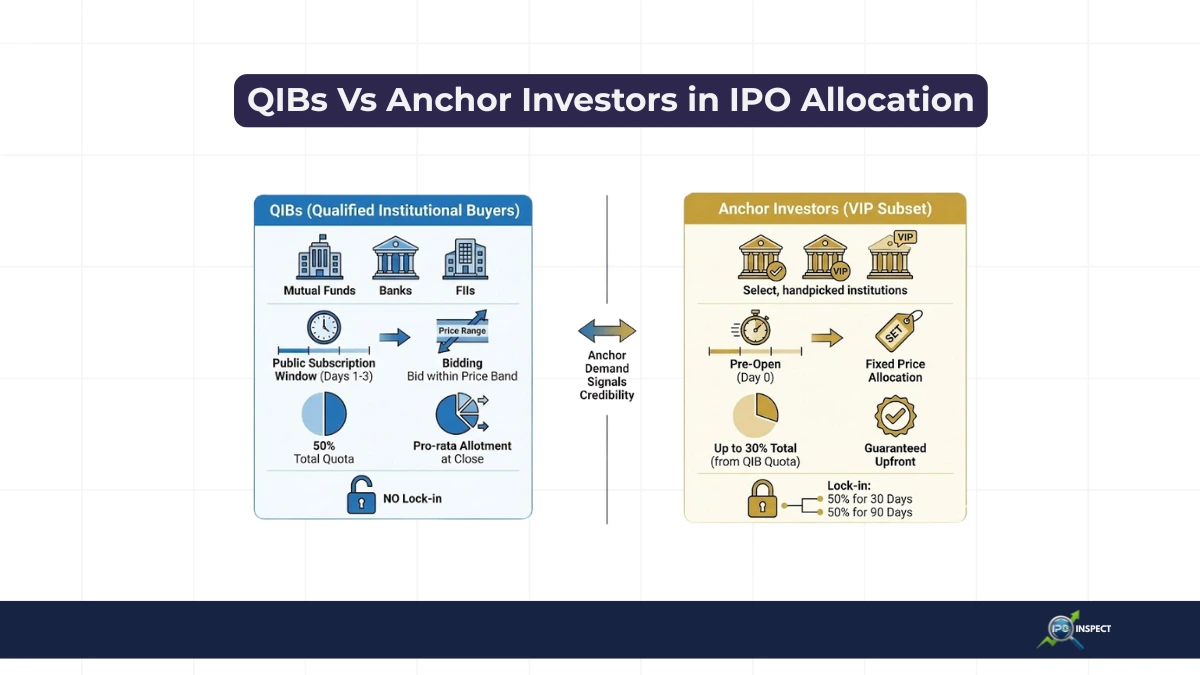
- Reservations: QIB ≤50%, NII ≥15%, Retail ≥35%, with separate employee category in IPO and Coal India shareholder quotas.
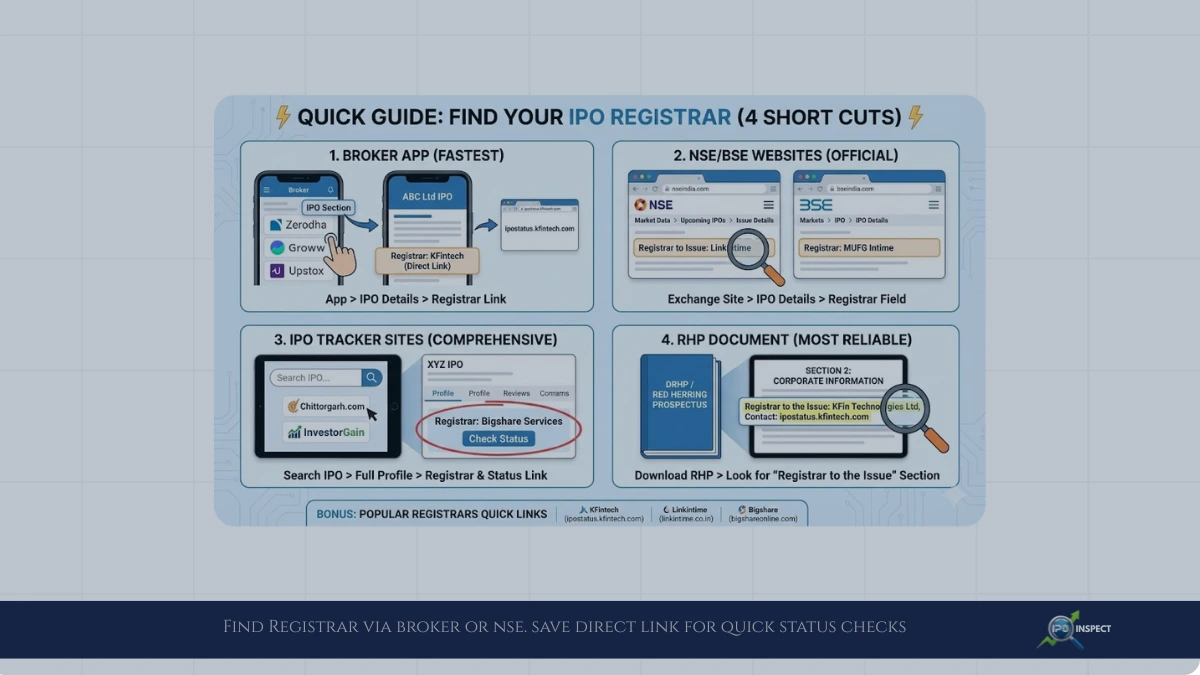
Lead manager is IDBI Capital Markets Services, co‑BRLM ICICI Securities [Finance: ICICI Securities Limited], registrar is Kfin Technologies.
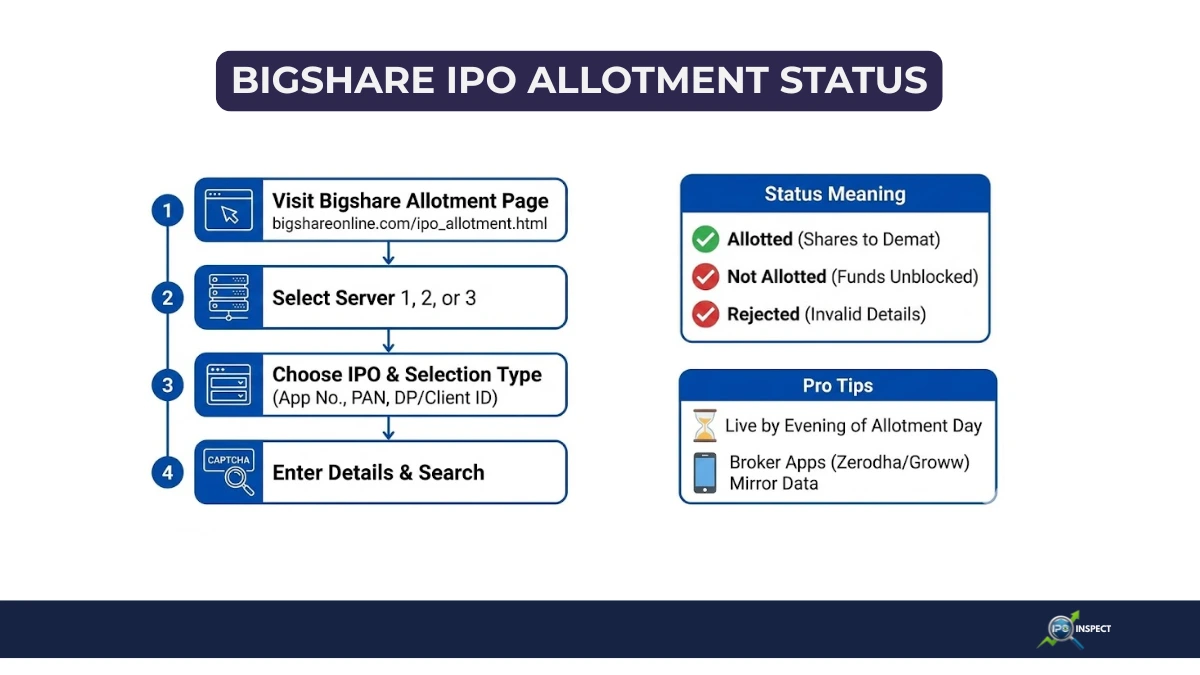
Retail investors can later track their KFintech IPO allotment status online once the basis of allotment is finalised.
Bharat Coaking Coal Limited Business Overview
In BCCL IPO, the RHP describes Bharat Coking Coal Limited as a Miniratna PSU and wholly‑owned subsidiary of Coal India Limited [finance: Coal India Limited] focused on producing coking coal, non‑coking coal and washed coal for steel, power and industrial consumers.
The offer sits within a broader IPO cycle and stages of going public that the government uses for divestment and capital market deepening.
Incorporated in 1972, BCCL operates 34 mines (26 opencast, 4 underground and 4 mixed) across the Jharia coalfield in Jharkhand and the Raniganj coalfield in West Bengal, covering about 288.31 sq. km.
Key highlights:
- Geological resources of 14,865 million tonnes, including around 7,910 million tonnes of coking coal reserves.
- Coal production grew from 30.51 MTPA in FY22 to 40.50 MTPA in FY25, a rise of about 32.7%, FY24 output was 41.10 MTPA.
- Coking coal dominates the mix, FY24 production included 39.11 MTPA coking coal and 1.99 MTPA non‑coking coal.
Besides mining, BCCL operates and plans washeries, monetises idle washeries under a Washery Developer & Operator (WDO) model, develops underground mines with Mine Developer & Operator (MDO) partners, and is piloting coal‑bed methane (CBM) and solar projects for diversification and energy efficiency.
Industry & Market Overview
The RHP places BCCL within India’s broader coal and steel value chain, which underpins power generation and industrial output.
India produced about 1,048 MMT of coal in FY25, coking coal demand was approximately 67 MMT and is projected by CRISIL to reach 104 – 138 MMT by FY35 in line with National Steel Policy 2017 targets of 300 MTPA steel capacity.
Stronger steel demand and supportive policy have already produced several best performing IPOs in related sectors, which investors track while evaluating BCCL.
Key industry points for BCCL IPO Analysis
- BCCL accounts for about 58.5% of domestic coking coal production, giving it a small share of total coal but a dominant position in metallurgical coal.
- India imports about 85–90% of its hard coking coal due to limited low‑ash domestic reserves; government programmes such as Mission Coking Coal and Vision 2030 aim to raise domestic washed coking coal usage to 40–56 MTPA by FY30 – FY35.
- Installed capacity of coking coal washeries is projected to rise from 38 MTPA in FY24 to 63 MTPA by FY30, with BCCL holding about 50% of national washery capacity in FY25.
Competition is mainly from other Coal India subsidiaries like CCL and private steel‑linked miners domestically, and from global exporters such as Alpha Metallurgical Resources and Warrior Met Coal in the seaborne market.
BCCL’s Jharia location close to eastern steel clusters reduces logistics cost but faces legacy mine fires and environmental constraints.
Objects of the issue
The key aspect in BCCL IPO is that the IPO is entirely an offer for sale:
Selling shareholders: The President of India acting through the Ministry of Coal, and Coal India Limited.
- Offer structure:
- Total OFS: 46.57 crore shares.
- Employee Reservation Portion: 2.3285 crore shares.
- Coal India shareholder portion: 4.657 crore shares (up to 10% of Offer).
- Net Offer: 39.5845 crore shares to QIB, NII and Retail.
No proceeds go to BCCL: The funds accrue to the Government/Coal India, while BCCL continues to fund capex and working capital through internal accruals and minimal borrowings.
This distinguishes the IPO from those raising growth capital, a point to highlight versus competitor summaries that only mention issue size and dates.
Financial highlights (FY23 – FY25)
Restated consolidated figures from the RHP (₹ crore):
| Metric | FY23 | FY24 | FY25 | H1 FY26* (30‑Sep‑25) |
|---|---|---|---|---|
| Total Income | 13,018.57 | 14,652.53 | 14,401.63 | 6,311.51 |
| EBITDA | 891.31 | 2,493.89 | 2,356.06 | 459.93 |
| EBITDA Margin (%) | ~6.8 | ~17.0 | 16.36 | ~7.3 |
| PAT | 664.78 | 1,564.46 | 1,240.19 | 123.88 |
| PAT Margin (%) | 5.11 | 10.68 | 8.61 | ~2.0 |
| Net Worth | 3,791.01 | 5,355.47 | 6,551.23 | 5,830.89 |
| Total Assets | 13,312.86 | 14,727.73 | 17,283.48 | 18,711.13 |
| Total Borrowings | Negligible | Negligible | ~0 | 1,559.13 |
| RoNW (%) | ~19.22 | ~34.21 | 20.83 | NA |
| ROCE (%) (FY25) | – | – | 30.13 | NA |
| EPS (₹, pre‑issue) | NA | NA | 2.66 | Annualised lower |
*H1 FY26 numbers are six‑month and not annualised.
Key observations for BCCL IPO Analysis & GMP Today Trends:
- Income grew from ₹13,018.57 crore (FY23) to ₹14,652.53 crore (FY24), then moderated slightly to ₹14,401.63 crore (FY25) due to price realignment and mix.
- Investors often compare such earnings trends with factors influencing high listing gains in IPOs, especially in cyclical sectors like commodities.
- EBITDA and PAT expanded sharply in FY24 with margin improvement, then normalised in FY25 as costs rose and realisations softened but remained much higher than FY23 levels.
- RoNW peaked above 34% in FY24 and settled at 20.83% in FY25, ROCE stands strong at 30.13%.
Cash Flow Analysis
While the RHP does not tabulate every cash‑flow line in the summary section, it highlights the following trends:
- Operating cash flows: Positive across FY23 – FY25, supported by advance collections from long‑term power and steel customers and limited receivable risk under linkage/e‑auction mechanisms.
- Investing cash flows: Significant outflows due to growing capex on opencast expansion, underground mechanisation, washeries and environmental projects like mine reclamation and solar assets (capex ₹1,814.9 crore in FY25 Vs ₹986.5 crore in FY23).
- Financing cash flows: Limited due to a near debt‑free balance sheet, flows relate mainly to dividends to Coal India/ Government and lease liabilities.
RHP data does not indicate any chronic mismatch of positive profits with negative operating cash flows, variations are cyclical and capex‑driven, not rooted in aggressive revenue recognition.
Risk Factors Investors Must Track
Important RHP risks to emphasise in BCCL:
- Reserve and geography concentration: Operations are concentrated in Jharia and Raniganj, eventual exhaustion of reserves, land constraints or regulatory bans could hit volumes and valuations.
- Quality and demand risk: Over 74 – 77% of revenue comes from raw coking coal, whose high ash and lower caking properties limit direct usage, future steel making technology or policy could alter blending patterns.
- ESG and regulatory tightening: Global decarbonisation, domestic air‑quality standards, mine‑closure norms and potential carbon taxes could raise costs or limit coal use.
- Operational hazards: Seam fires, subsidence, overburden slips and industrial accidents in old underground workings pose production and liability risks.
- Contingent liabilities: About ₹3,598.59 crore of contingent liabilities (tax and other disputes) may impact net worth and cash if crystallised.
- Productivity gap: Output per manshift is lower than some Coal India peers, especially MCL, leading to higher unit costs unless mechanisation and washery efficiency improve.
Promoters, Management and Governance
The promoters of BCCL are:
- The President of India acting through the Ministry of Coal, Government of India.
- Coal India Limited [Finance: Coal India Limited].
- Pre‑IPO: 100% held by Government/Coal India.
- Post‑IPO: About 90% (10% public float via OFS).
Key management includes a Chairman‑cum‑Managing Director and whole‑time directors heading operations, finance and personnel, all with decades within the Coal India ecosystem.
The RHP does not report any serious legal or regulatory controversies involving promoters or key managerial personnel beyond typical PSU‑level litigations and investigations.
Related Party Transactions
Major related‑party transactions disclosed include:
- Sale of coal to group entities and other PSUs under notified prices and government linkage‑based allocations.
- Dividend payments and cash transfers to Coal India as holding company.
- Shared services and cost allocations within Coal India group on documented policies.
None of these appear structurally abnormal or conflict‑prone, they are typical of government‑owned resource PSUs and operate under statutory and policy frameworks rather than discretionary promoter arrangements.
Peer comparison and valuation
The RHP compares BCCL with domestic subsidiaries CCL and MCL and international metallurgical coal companies:
Profitability snapshot FY25 (₹ crore, margins %):
| Company | Revenue | EBITDA | EBITDA % | PAT | PAT % | RoNW % |
|---|---|---|---|---|---|---|
| BCCL | 13,802.6 | 2,356.1 | 16.36 | 1,240.2 | 8.61 | 20.83 |
| CCL (India) | 16,920.0 | 6,456.5 | ~38 | 4,039.5 | ~23 | 26.52 |
| MCL (India) | 26,986.2 | 15,331.1 | ~57 | 10,825.1 | ~38 | 62.70 |
| Alpha Metallurgical (US) | 25,320.3 | 3,269.8 | ~13 | 1,606.1 | 6.30 | 11.48 |
| Warrior Met Coal (US) | 13,058.9 | 3,783.7 | ~29 | 2,145.7 | 16.08 | 12.82 |
- Pre‑issue EPS (FY25): ₹2.66 > P/E 8.6x.
- Pre‑issue book value per share: ₹14.1 > P/B 1.63x.
- RoNW: 20.83%, ROCE: 30.13%.
Compared with many global coal stocks that trade at mid‑single‑digit P/E due to heightened ESG risk, BCCL’s P/E of 8 – 9x and P/B – 1.6x look moderate given sovereign backing, coking‑coal focus and relatively strong returns.
However, ROCE and margins trail internal peers like MCL, which investors should factor when evaluating BCCL IPO Analysis & GMP Today Trends.
Red flags checklist
Based on the RHP and competitor content:
- Negative CFO Vs Profits: No consistent pattern, operating cash follows earnings with timing differences.
- Sudden Profit Spike: Profitability improved sharply from FY23 to FY24 on better realisations, but dipped in FY25, no pre‑IPO earnings engineering evident.
- Large OFS: Entirely OFS, no growth capital comes in, which is the main structural negative.
- Auditor Issues: No major qualifications reported in restated accounts.
- Client Concentration: Revenue is diversified across power and steel PSUs, though sectorally concentrated in steel/power demand.
- Legal Proceedings: Contingent liabilities are sizeable but not unusual for a PSU miner.
BCCL GMP Today and Listing Expectations
Competitor data on BCCL IPO & IPO GMP today trends shows the latest grey market premium (GMP) at about ₹13 per share.
Against a cap price of ₹23, this implies an estimated listing price near ₹34.4 and notional listing gain of around 49.57% for successful allottees, with retail “subject to sauda” reported at roughly ₹5,900.
- Jan 8 2025: ₹11.4 (Stable).
- Jan 7 2025: ₹11.4 (down further, but still strong).
- Jan 6: ₹11.5 (down further, but still strong).
- Jan 5: ₹13.5 (down).
- Jan 4: ₹16.25 (up).
- Jan 3: ₹13 (no change, band not yet effective).
The trend shows cooling sentiment from the initial peak but still points to healthy listing expectations, especially given low pricing and high PSU interest, however, GMP remains an informal, unregulated sentiment indicator and should not be the sole basis for BCCL IPO, especially given well‑documented IPO grey market risks for retail investors.
Investor takeaway for BCCL IPO
For medium‑term investors who understand commodity and policy risk, BCCL IPO present a reasonably valued coking coal leader with strong reserves, comfortable returns and near debt‑free status at around 8-9x FY25 earnings and 1.6x book.
The flip side is that this is a 100% government disinvestment with no fresh funds for growth, productivity lags some internal peers, and the long‑term structural headwinds to coal from climate policy and technology transitions are real.
Factoring these along with current GMP, BCCL suits investors seeking PSU disinvestment opportunities and potential listing gains and they may also compare BCCL with other live and upcoming IPOs to decide position sizing in their portfolio, while deep‑green or ultra long‑term ESG‑sensitive portfolios may prefer to stay cautious despite the attractions in BCCL IPO.