Ever come across NII while checking an IPO prospectus and wondered what it means? You’re not alone, it’s one of those terms that pops up everywhere in IPO discussions but can feel a bit mysterious at first.
NII stands for Non-Institutional Investor, and it’s basically the category for bigger individual players who bid more than the retail limit defined for maximum lots in IPO. Let me break it down for you in plain terms.
Who Exactly Counts as NII in IPO?
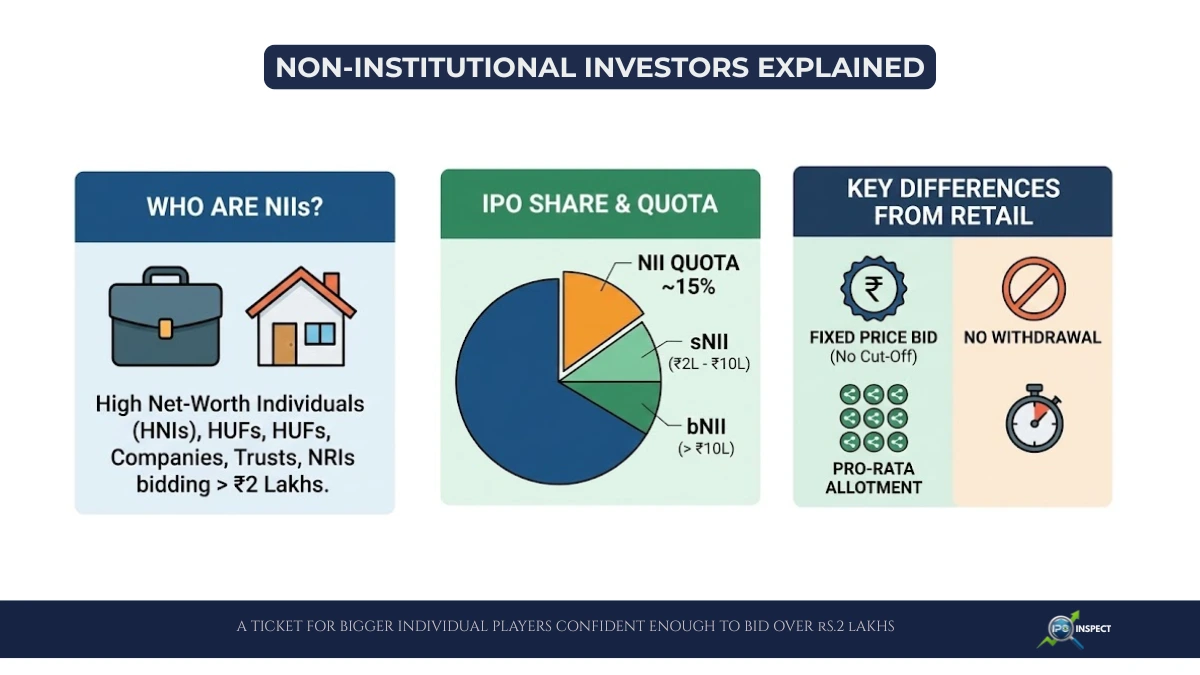
Think of NII as the high rollers among everyday investors, not big banks or funds (those are QIBs), but people or small groups with enough cash to apply for over ₹2 lakhs worth of shares. Here’s who fits the bill:
- High net-worth individuals (HNIs) ready to go big on a single IPO.
- Most NIIs follow the same core IPO cycle and application stages, but at a much larger scale than typical retail participants.
- Hindu Undivided Families (HUFs) pooling family money.
- Companies, trusts, societies, or partnership firms dipping into public issues.
- Even NRIs using NRE/NRO accounts for amounts above the retail cap.
No fancy SEBI registration needed like for institutions, just a demat account and the willingness to bid big.
NII Share in the IPO Pie
SEBI makes sure NIIs get a fair shot by reserving about 15% of the total IPO shares for this category (companies can offer more, but never less) , within the broader allocation framework explained in IPO allotment process and that quota is split into:
| Sub-Category | Bid Amount Range | Share Reservation |
|---|---|---|
| sNII (Small NII) | ₹2 lakhs to ₹10 lakhs | Part of 15% quota |
| bNII (Big NII) | Above ₹10 lakhs | Part of 15% quota |
When sNII and bNII demand shoots up, the quota quickly gets crowded, so tracking IPO subscription levels and demand signatures and knowing what happens when an ipo is oversubscribed becomes crucial.
This setup keeps things balanced so retail folks aren’t crowded out completely.
How NII Bidding Works Differently
Unlike retail investors who can grab the easy cut off price in IPO, NIIs have to pick a specific price within the IPO price band details and stick to it, no backing out later.
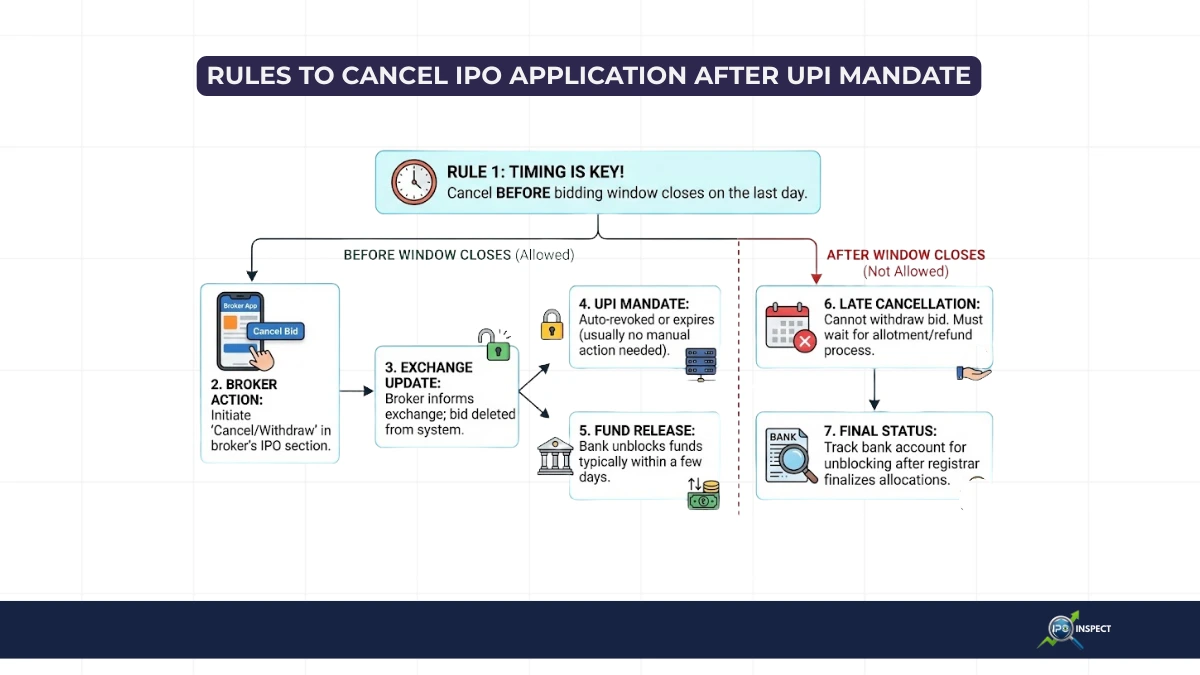
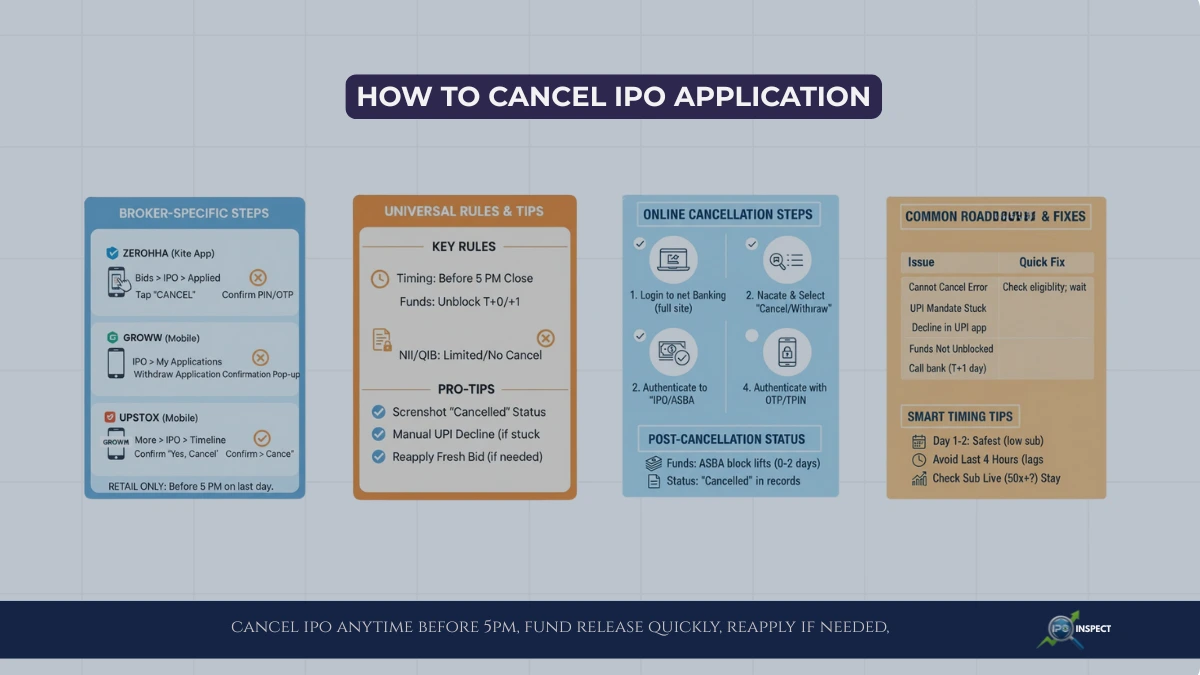
They also can’t withdraw bids right up to allotment day like some others can. In oversubscribed IPOs, allotment happens on a pro-rata basis, meaning if 10x demand hits the quota, everyone gets about 10% of what they asked for.
For example, if you bid ₹5 lakhs as sNII in a hot IPO and the quota fills 20x over, you might land just 5% of your lots, but it’s still shares in hand.
NII vs Other IPO Categories: Quick Comparison
These categories sit alongside others such as employee quota and follow-on offers, which are covered separately when discussing what is employee category in IPO and What is FPO in share market.
| Category | Max Bid Limit | Quota % | Allotment Style | Cut-Off Allowed? |
|---|---|---|---|---|
| Retail (RII) | Up to ₹2 lakhs | ~35% | Lottery + pro-rata | Yes |
| NII | Above ₹2 lakhs | ~15% | Pro-rata | No |
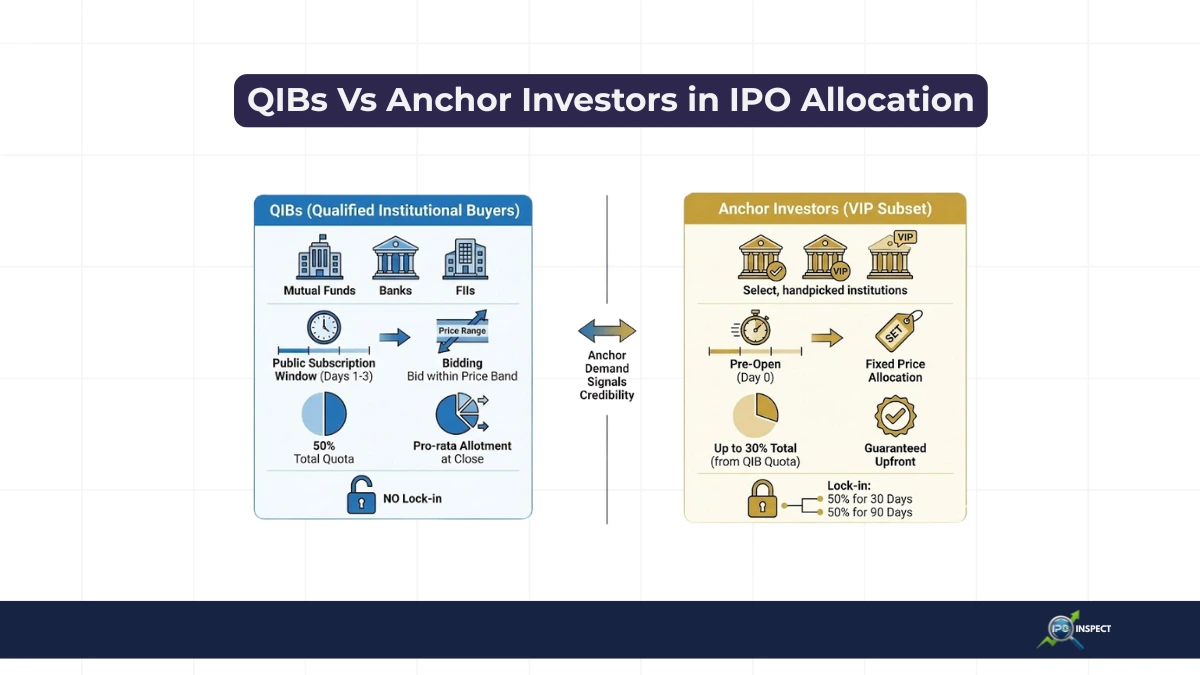
| QIB | No upper limit | ~50% | Pro-rata/ discretionary | No |
NIIs bridge the gap, aggressive enough for big bets but without the institutional red tape.
Why NII Category Exists (and Why it Matters to You)
This setup lets companies attract serious money from wealthy individuals without relying solely on giant funds.
For you as an investor, jumping into NII means chasing higher allotment potential in less crowded quotas, but it comes with the risk of zero shares if demand explodes, which is a common concern for those asking why i am not getting IPO allotment.
Many HNIs love it for scaling up on promising IPOs.
One catch: Multiple family members applying as separate NIIs? Exchanges might flag it as one application unless properly documented.
Tips If You’re Thinking NII Route
- Check the prospectus for exact sNII/bNII split, some IPOs tweak it
- Bid early in the window to avoid last-day glitches
- Have extra funds ready since pro-rata can surprise you
- Track subscription status; super-high NII numbers often signal listing pops when combined with IPO GMP today live trends and other GMP-based listing examples.
NII in IPO is your ticket to playing bigger when retail limits feel too tight. It’s for those confident enough to bid over ₹2 lakhs, snag 15% quota shares via pro-rata, and handle the no-cut-off rule.
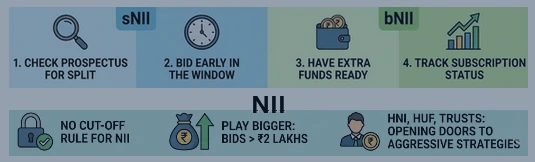
Whether you’re an HNI, HUF head, or trust manager, understanding what is NII in IPO opens doors to more aggressive IPO strategies without needing institutional status.